Empowering Kids: 5 Essential Bathroom Chores for Responsibility and Life Skills
As parents, we often find ourselves juggling countless tasks, from work to managing a household. While it might seem easier to tackle all the chores ourselves, involving our children in household responsibilities, even during the carefree days of summer, offers profound benefits that extend far beyond a clean home. Instilling a sense of responsibility from a young age is crucial for fostering independent, capable individuals. This guide will explore five simple yet impactful bathroom chores perfect for kids, along with insights into linking chores to financial literacy and smart household management.
The Undeniable Value of Chores for Children
The idea of kids doing chores isn’t just about lightening a parent’s load; it’s a cornerstone of character development. When children contribute to the household, they learn invaluable life lessons:
- Responsibility: Understanding that they are accountable for certain tasks and that their actions (or inactions) have consequences for the family unit.
- Teamwork: Recognizing that a household functions best when everyone plays a part, fostering a sense of belonging and collective effort.
- Life Skills: Mastering practical skills they’ll need as adults, from basic hygiene to maintaining a living space.
- Work Ethic: Developing an understanding that effort leads to results, and that dedication to tasks is rewarding.
- Respect for Property: Learning to care for their surroundings and appreciate the effort that goes into maintaining a comfortable home.
We’ve found that integrating a “clean as we go” philosophy works wonders. Instead of dedicating entire weekends to a massive cleaning overhaul, daily or weekly smaller tasks make the workload manageable and instill consistent habits. This approach ensures that tidiness becomes a natural part of everyday life, rather than a dreaded chore day.
Chores, Allowance, and Early Financial Literacy
Connecting chores to an allowance system can be a powerful tool for teaching children about money management. Our son, for example, earns an allowance through his contributions, which has sparked a keen interest in personal finance. As our daughter grows, we’re gradually introducing her to this concept, ensuring she understands the link between effort and reward, even if her allowance system looks a bit different at a younger age.
Beyond earning, teaching kids to be financially savvy and frugal is a life skill that pays dividends. Recently, we explored strategies for saving money, which immediately captivated our son. I introduced him to ibotta, a fantastic app that helps families save on groceries and household essentials, freeing up funds for other important areas. He quickly grasped the concept, realizing that smart shopping could directly impact our household budget.
During a recent trip to Walmart, we specifically looked for deals on Cottonelle Mega Rolls, knowing there was an ibotta offer available. To our delight, we discovered an additional coupon for $1.50 off at the store, leading to even greater savings! My son’s excitement mirrored my own; there’s a unique thrill in getting a great deal on essential items you’d buy anyway. It reinforces the idea that conscious spending and seeking out value can make a tangible difference.
5 Simple Yet Impactful Bathroom Chores for Kids
The bathroom, often a high-traffic area, presents several opportunities for children to contribute meaningfully. These five chores are straightforward, age-appropriate, and teach vital lessons in hygiene, organization, and basic household management:
1. Wipe Down the Counters
This is a perfect starting point for young helpers. After brushing teeth or washing hands, splashes and toothpaste residue can quickly accumulate. Equipping kids with a microfiber cloth and a child-safe cleaning spray (or just water for younger ones) makes this task simple. They learn the importance of cleanliness, prevent grime buildup, and take pride in an immediately visible result. It also teaches them to be mindful of their own mess.
2. Restock Toilet Paper
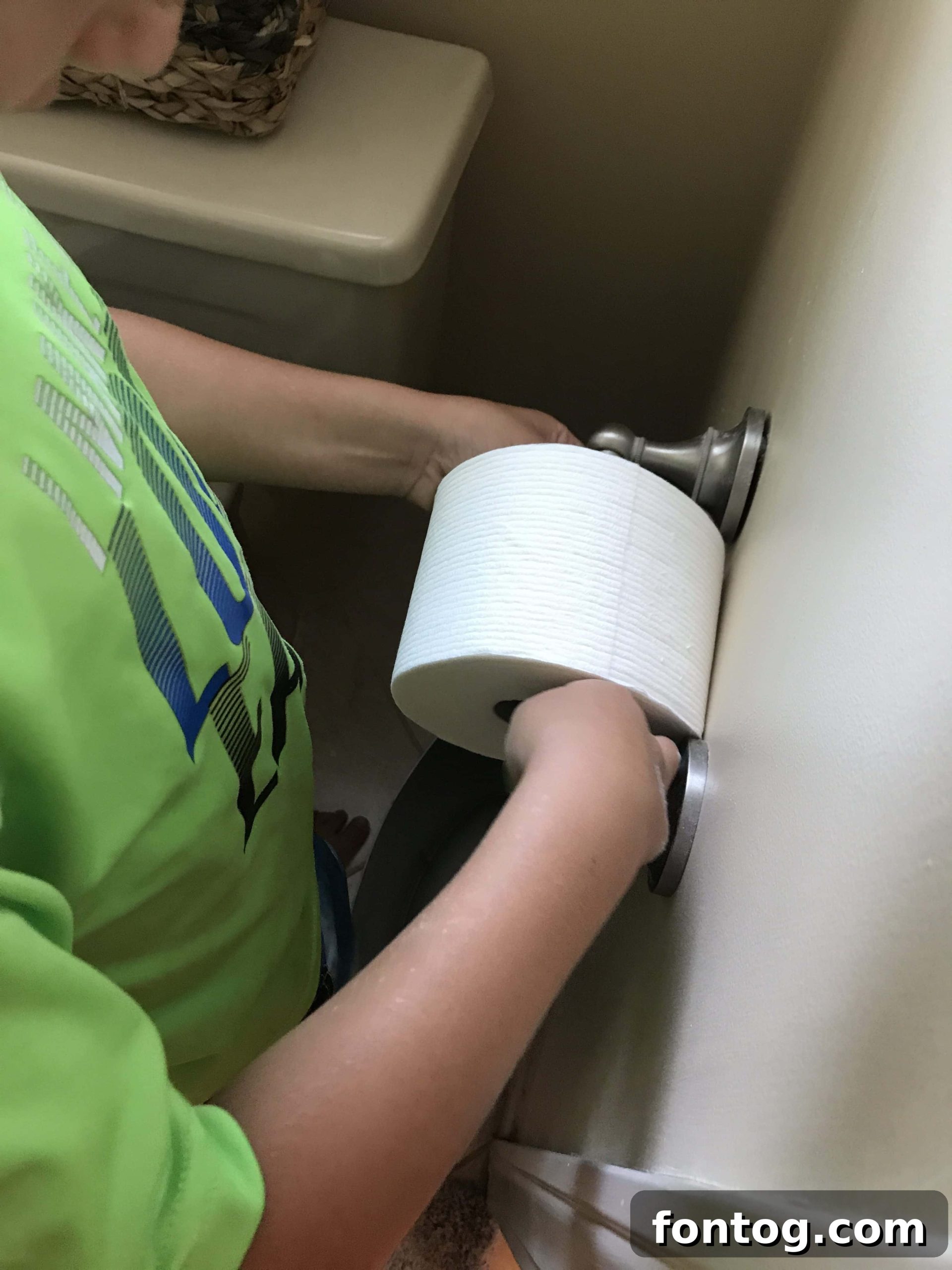
A seemingly minor task, yet running out of toilet paper is an inconvenience everyone wants to avoid! Assigning this chore teaches foresight and proactive thinking. Kids can be responsible for ensuring a fresh roll is always on the dispenser and that a small basket of extra rolls is readily available. This cultivates an understanding of household inventory and the importance of preparedness, preventing small emergencies before they happen.
3. Change or Hang Hand Towels
Damp, crumpled hand towels are not only unsightly but also breeding grounds for germs. Children can be tasked with swapping out used hand towels for fresh ones on a regular basis, or at the very least, hanging up damp towels to dry neatly. This chore emphasizes hygiene, organization, and introduces them to basic laundry rotation, showing them how to keep shared items clean and presentable for everyone.
4. Ensure Soap Dispensers Are Full
Handwashing is a cornerstone of good health, and an empty soap dispenser can quickly derail this habit. Kids can monitor soap levels and refill dispensers as needed. This simple act reinforces the importance of hygiene and teaches resource management. They learn to recognize when supplies are running low and take initiative to replenish them, a practical skill applicable in many areas of life.
5. Clean Out Toothbrush Caddies
Toothbrush caddies can become surprisingly grimy with drips of toothpaste and water. Regularly emptying and rinsing them out with warm water and a little soap is an excellent chore for promoting oral hygiene awareness. It teaches children to pay attention to small details, understand where germs can hide, and maintain personal items properly. This task helps keep toothbrushes sanitary and the counter area tidy.
Implementing a Successful Chore System
Introducing chores requires a clear system and consistent follow-through. Here are a few tips to make it a positive experience for everyone:
- Be Age-Appropriate: Start with simple tasks and gradually introduce more complex ones as your child grows.
- Show, Don’t Just Tell: Demonstrate how to do each chore effectively. Work alongside them initially.
- Be Consistent: Make chores a regular part of the routine. A visual chore chart can be incredibly helpful.
- Praise and Encourage: Acknowledge their efforts and achievements. Positive reinforcement goes a long way.
- Make it Fun: Turn it into a game, play music, or offer small, non-monetary rewards for a job well done.
These simple daily contributions significantly reduce the overall household workload and, more importantly, empower children with confidence and essential life skills they’ll carry into adulthood.
Beyond the Bathroom: Expanding Life Skills
The lessons learned through these bathroom chores are transferable to countless other areas of life. A child who understands the importance of restocking toilet paper will likely apply that foresight to other household supplies or even their schoolwork. The discipline of wiping down counters translates into keeping their own room tidy. These foundational habits are building blocks for greater independence and self-sufficiency.
Smart Shopping and Saving for Families
Just as we teach our children to manage their responsibilities, we also aim to equip them with skills for managing resources. Utilizing tools like ibotta has become a staple in our family’s budgeting strategy, allowing us to stretch our dollars further on everyday necessities. For added convenience, services like Walmart Grocery Pickup streamline our shopping, saving precious time for family activities.
Empowering children through chores and teaching them about financial responsibility are gifts that keep on giving. Start with these five simple bathroom tasks, and watch your children grow into confident, capable, and contributing members of your family and community. Happy saving and happy chore-doing!