Breathe Easier: Unveiling the Secret to a Fresher Car Interior and Allergy Relief
For anyone who has battled seasonal allergies, you know the struggle is real. The itchy, watery eyes, the constant sneezing, the perpetual feeling of congestion – it’s a relentless assault on your comfort and well-being. As someone who has endured severe allergies for most of my life, even resorting to allergy shots for fifteen years, I’ve learned to be proactive. My quest for relief extends beyond the home, into every environment I inhabit, including my vehicle. Yet, for years, I overlooked a critical component that dramatically impacts the air quality inside my car: the cabin air filter.
It’s a common misconception, one I shared for a long time, to confuse the engine air filter with the cabin air filter. While both are vital for vehicle maintenance, they serve distinct purposes. The engine air filter protects your engine, ensuring it breathes clean air for optimal performance. The cabin air filter, however, is your personal guardian, safeguarding the air you and your passengers breathe inside the car. This simple, often-forgotten filter plays a monumental role in trapping pollutants, allergens, and odors before they ever reach your lungs.
What Exactly Is a Cabin Air Filter and Why Does It Matter?
The cabin air filter is a small, pleated filter, typically made of paper or synthetic fibers, designed to purify the air entering your vehicle’s heating, ventilation, and air conditioning (HVAC) system. As your car’s fan draws air from the outside to cool or heat the cabin, it first passes through this filter. Its primary job is to catch a wide array of airborne particles and contaminants, effectively preventing them from circulating within your car’s interior. This includes everything from:
- Dust and dirt
- Pollen and other allergens
- Soot and exhaust fumes
- Road debris and insects
- Mold spores and bacteria
- Unpleasant odors from traffic or the environment
For allergy sufferers like myself, a clean cabin air filter isn’t just a matter of comfort; it’s a necessity for managing symptoms. Driving with a clogged filter is akin to sitting in a small, enclosed space with a constant influx of irritants. It can exacerbate sneezing, coughing, and eye irritation, turning a routine commute into an unbearable ordeal. Beyond allergies, poor cabin air quality can contribute to general respiratory discomfort, fatigue, and even headaches for all occupants.
Discovering the FRAM Fresh Breeze Advantage
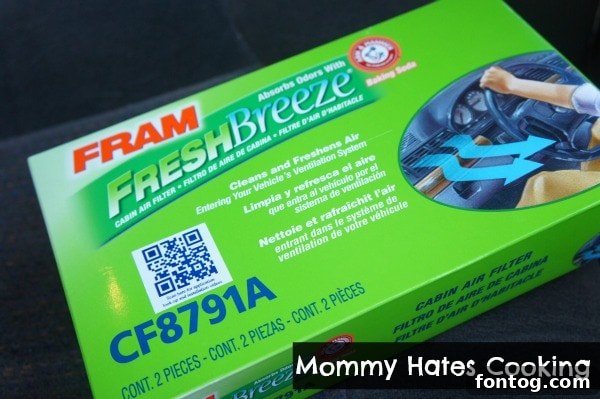
My journey to better car air quality led me to the FRAM Fresh Breeze Air Filter, a product that immediately caught my attention due to its innovative design. What sets this particular filter apart is its integration of Arm & Hammer Baking Soda and activated carbon. This powerful combination goes beyond basic particulate filtration to actively absorb and eliminate odors, providing a truly fresh cabin environment. While many standard cabin air filters excel at trapping visible particles, they often fall short in neutralizing smells from exhaust, pets, food, or stale air. The activated carbon layer in the FRAM Fresh Breeze filter acts like a sponge, drawing in gaseous pollutants and odor molecules, while the baking soda further enhances its odor-absorbing capabilities.
The accessibility of these filters is another major plus. You can easily find FRAM Fresh Breeze filters at retailers like Walmart, making it convenient for anyone to pick one up during their regular errands. The promise of cleaner air and a fresher scent in my car, especially with my severe allergies, was too good to pass up. I was eager to experience the difference firsthand.
The DIY Cabin Air Filter Replacement: A Surprising Reveal
Before diving into a replacement, it’s crucial to first determine if your vehicle is equipped with a cabin air filter that can be changed. Not all older models have this feature, or sometimes they are permanently integrated. A quick check of your car’s owner’s manual or an online search for your specific make, model, and year will provide this essential information. My initial attempt to replace the filter in my 2006 Dodge Caravan, which is my primary vehicle, proved this point. After some investigation, we realized that our Caravan, unfortunately, did not have an accessible, changeable cabin air filter. While I was initially disappointed, this highlights the importance of checking compatibility beforehand.
Undeterred, we turned our attention to my husband’s 2001 Chevy Silverado, a truck we’ve owned for approximately seven years. To our astonishment, neither of us could recall ever changing its cabin air filter – a task that, based on manufacturer recommendations, should be done annually or every 12,000 to 15,000 miles. This realization set the stage for what would be a truly eye-opening experience.
Step-by-Step Replacement (and Lessons Learned):
- Locate the Filter: Cabin air filters are most commonly found behind the glove compartment, under the hood near the windshield wiper motor, or sometimes under the dashboard. For the Silverado, it was behind the glove box.
- Access the Housing: This usually involves releasing clips, removing screws, or simply squeezing the sides of the glove box to allow it to drop down.
- Remove the Old Filter: Following the instructions provided with the new FRAM filter, we proceeded to remove the old one. The instructions wisely suggested placing a towel underneath to catch any debris. We, in our eagerness, skipped this step. We quickly regretted it.
The Shocking Reveal: Years of Accumulated Grime
The moment we pulled out the old filter from the Silverado, we were absolutely flabbergasted. The difference between the old, grimy filter and the crisp, clean FRAM Fresh Breeze filter was astounding. The old filter was not just dusty; it was thick with layers of compacted dirt, leaves, insects, and an unrecognizable dark film. It was a tangible representation of all the “garbage” we had been unknowingly breathing in for years. The sheer volume of pollutants trapped in that filter made us realize the critical importance of this simple maintenance task.
In just a few minutes, we easily slipped the new FRAM Fresh Breeze filter into place. The process was straightforward, requiring no special tools, only a little patience and a determination to improve our car’s air quality. The visual contrast alone was enough to make us feel a sense of immediate relief and satisfaction.
The Immediate Benefits: A Breath of Fresh Air
The difference was palpable from the first drive. The air inside the Silverado immediately felt cleaner, lighter, and noticeably fresher. The subtle musty odor that we had grown accustomed to was gone, replaced by a neutral, clean scent. For someone constantly battling allergies, this improvement wasn’t just a nicety; it was a significant boost to my comfort. I could drive without the immediate onset of itchy eyes or the need for a tissue. It truly transformed the driving experience, making the car feel less like a sealed box of circulating pollutants and more like a sanctuary of clean air.
This experience highlighted a powerful truth: your car’s interior air quality can often be worse than the air outside, especially if your cabin air filter is neglected. Studies have shown that vehicle cabins can trap pollutants at concentrations higher than those found on the road itself. Without a functioning filter, your car becomes a concentrated environment for allergens, exhaust fumes, and other harmful particulates.
When to Replace Your Cabin Air Filter: A Proactive Approach
To maintain optimal air quality and protect your health, regularly replacing your cabin air filter is essential. While general recommendations suggest replacement every 12,000 to 15,000 miles or once a year, several factors can influence this frequency:
- Driving Conditions: If you frequently drive in dusty environments, heavy traffic, or areas with high pollen counts, you may need to replace your filter more often.
- Local Air Quality: Living in an area with poor air quality or high industrial pollution will accelerate filter clogging.
- Pets and Smokers: Vehicles that frequently transport pets or smokers will accumulate dander and odors more quickly, necessitating earlier replacement.
- Allergy Sufferers: If you or your passengers suffer from severe allergies or asthma, more frequent changes can provide significant relief.
Signs that your cabin air filter needs attention include reduced airflow from your vents, persistent stale or musty odors in the cabin, increased fan noise, or a noticeable worsening of allergy symptoms while driving. Don’t wait until these symptoms become severe; proactive replacement is always the best strategy for maintaining a healthy and comfortable driving environment.
Don’t Wait – Experience the FRAM Fresh Breeze Difference Today!
Taking care of your car’s cabin air filter is a simple yet impactful step towards better health and a more enjoyable driving experience. Whether you’re an allergy sufferer, a parent wanting cleaner air for your children, or simply someone who appreciates a fresh-smelling car, a clean cabin air filter is a non-negotiable component of vehicle maintenance. The FRAM Fresh Breeze Air Filter with Arm & Hammer Baking Soda offers a superior solution, trapping particles and eliminating odors for truly clean air.
I wholeheartedly encourage you to check your vehicle’s cabin air filter. If you haven’t changed it recently, prepare for a potentially surprising reveal, just like ours! You can easily find FRAM Fresh Breeze filters at Walmart. And to make this essential upgrade even more accessible, be sure to use this rebate!
Join the conversation and share your experience on Twitter using #FresherCar!
I am a member of the Collective Bias® Social Fabric® Community. This shop has been compensated as part of a social shopper insights study forCollective Bias® and FRAM #cbias #SocialFabric All thoughts and opinions are my own.