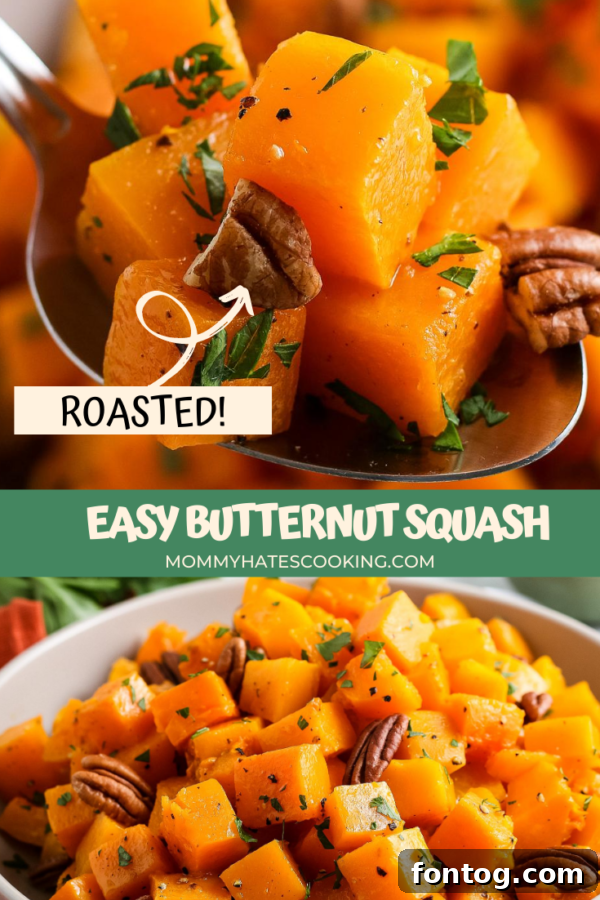
Delicious Roasted Butternut Squash: The Ultimate Fall & Winter Side Dish
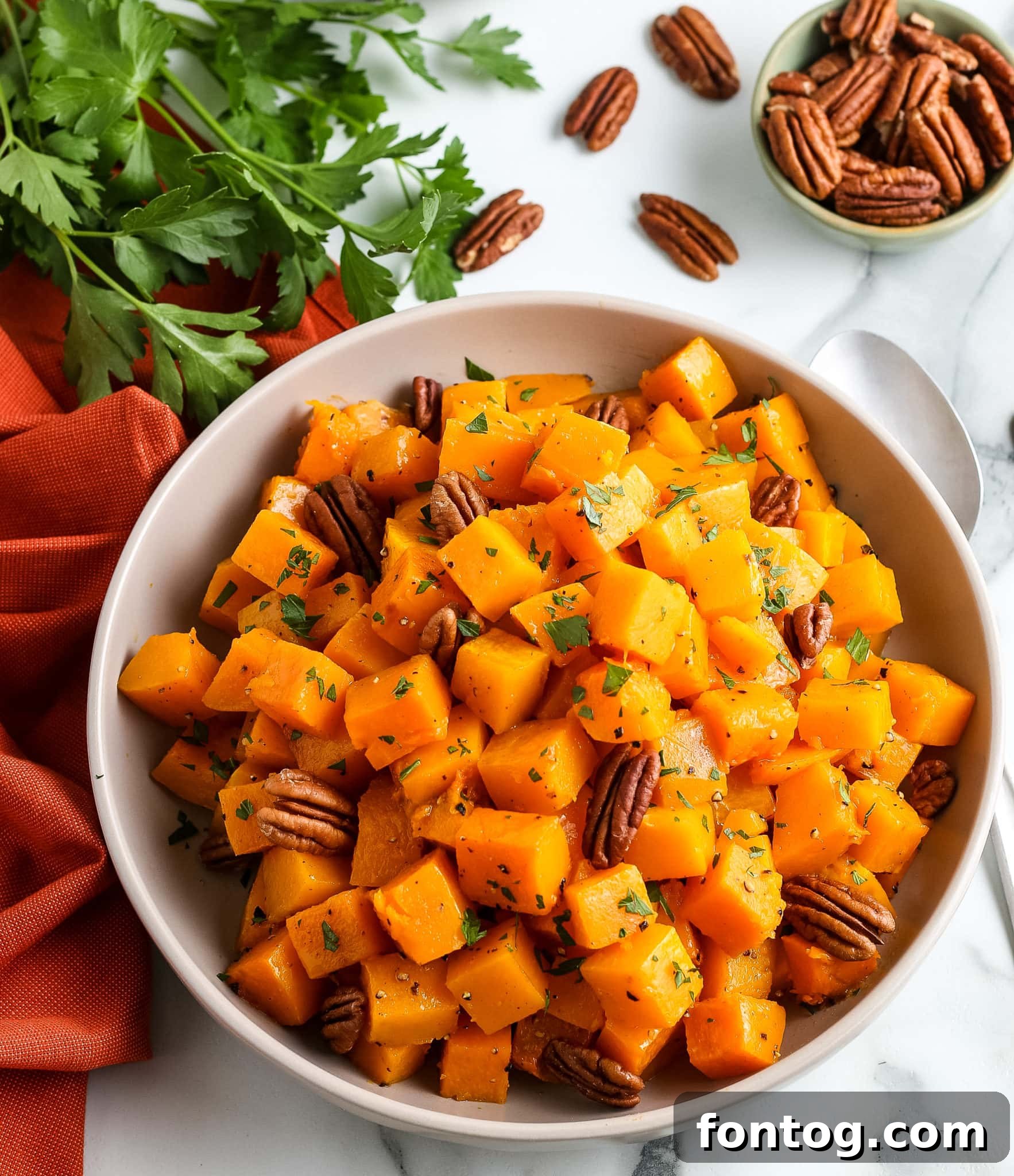
As the leaves change and a crisp coolness fills the air, our kitchens instinctively turn to warm, comforting flavors. Among the stars of fall and winter produce, butternut squash shines brightest. This Roasted Butternut Squash recipe elevates a humble vegetable into an exquisite side dish that’s both beautiful to behold and incredibly delicious to savor. Its naturally sweet, nutty flavor, enhanced by the caramelization of roasting, makes it an irresistible addition to any meal, from a weeknight dinner to a festive holiday feast.
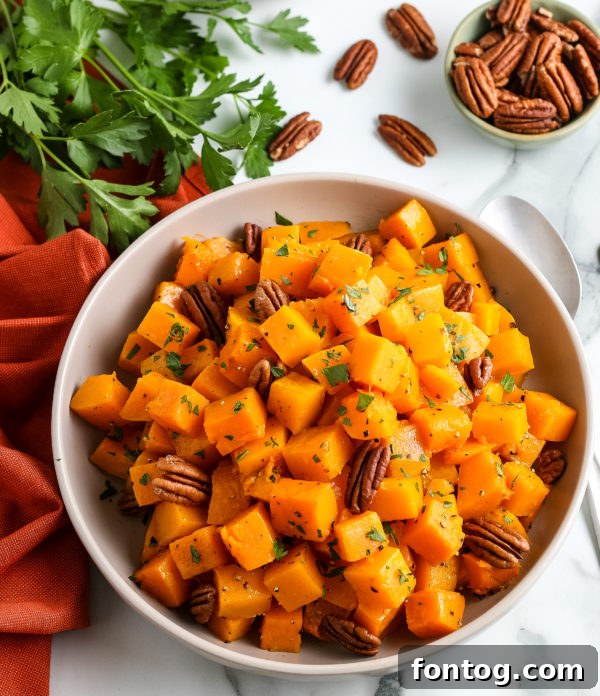
While roasting unlocks its full potential, butternut squash is wonderfully versatile. If you’re looking for alternative cooking methods, you might enjoy preparing it in an air fryer for a quicker crisp. This Air Fryer Butternut Squash recipe uses a similar flavoring profile but adapts the cooking process for the air fryer, making it incredibly simple and efficient. For those who prefer a hands-off approach, a slow cooker can also work wonders. Discover how to create a hearty and comforting dish with Butternut Squash and Apples in the Slow Cooker, perfect for infusing your home with a delightful aroma.
What is Butternut Squash? A Culinary Gem
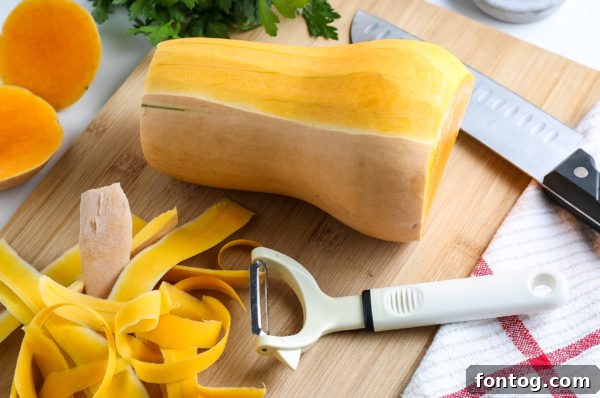
Butternut squash (Cucurbita moschata) is a type of winter squash, known for its distinctive “pear” shape, hard shell, and vibrant orange flesh. It grows on a vine and is typically harvested in the fall, lasting well into winter due to its excellent storage capabilities. Its flavor profile is a delightful blend of sweet and nutty notes, often compared to pumpkin or sweet potato, but with its own unique creamy texture when cooked. This makes it incredibly popular in a diverse range of recipes, from hearty soups and stews to comforting purees, risottos, and, of course, as a cherished roasted side dish.
When selecting a butternut squash, look for one that feels heavy for its size, has a dull — not shiny — skin, and is free of soft spots or blemishes. A vibrant, deep tan color indicates ripeness and a rich flavor. Once you bring it home, an uncut butternut squash can be stored in a cool, dark place for up to a month, sometimes even longer. If you’ve cut it, wrap the pieces tightly in plastic wrap and store them in the refrigerator for up to 3-5 days. Its widespread availability during the autumn and winter months makes it an accessible and affordable ingredient, perfectly suited for holiday dinners and everyday meals alike.
Preparing Butternut Squash: Peeling, Seeding, and Cubing
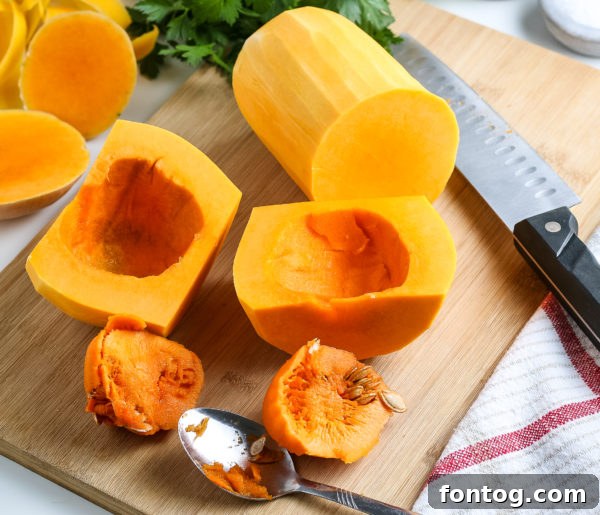
To Peel or Not to Peel?
When it comes to roasting butternut squash, the question of whether to peel it often arises. While the skin of butternut squash is technically edible and softens during roasting, many people prefer to remove it for a smoother, more uniform texture. Personally, we find that peeling the squash before roasting results in a more pleasant eating experience, as the skin can sometimes be a bit tough or fibrous. If you do choose to leave the skin on, ensure you wash it thoroughly beforehand.
Step-by-Step Cutting Guide
Preparing butternut squash can seem daunting due to its hard exterior, but with a few simple steps and a sharp knife, it becomes much easier. Safety is key here, so always work on a stable cutting surface and use a firm grip.
- Stabilize the Squash: First, carefully cut off both ends of the squash. This creates flat surfaces, making it much more stable on your cutting board.
- Peel the Skin: You have a couple of options here. A vegetable peeler, especially a sturdy Y-peeler, works effectively to remove the tough outer skin. Alternatively, a very sharp chef’s knife can be used — carefully slice down the length of the squash, following its curve, to remove the skin in strips.
- Halve and Deseed: Once peeled, the squash is easier to handle. Cut the squash in half horizontally, usually just above where the bulbous, seed-filled bottom begins. Then, cut the bulbous section in half lengthwise. Use a sturdy spoon to scoop out the seeds and any stringy bits. The top, neck-like section of the squash is usually solid flesh.
- Cube for Roasting: The key to beautifully roasted squash is uniform pieces. For optimal roasting, cube the squash into roughly 1-inch pieces. This ensures that all pieces cook evenly and caramelize perfectly. Simply slice the squash halves into thick planks, then cut those planks into cubes.
After you’ve prepared Roasted Butternut Squash a few times, you’ll quickly develop a feel for your preferred peeling and cutting methods, making the process even quicker and more intuitive.
Nutritional Powerhouse: The Benefits of Butternut Squash
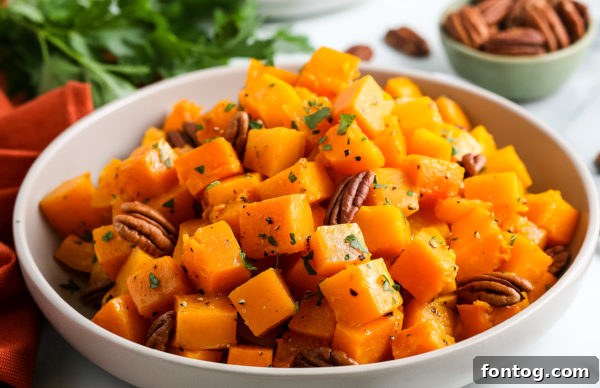
Beyond its delightful taste and versatility, butternut squash is a nutritional powerhouse, making it an excellent addition to a healthy diet. It’s packed with essential vitamins, minerals, and dietary fiber, contributing to overall well-being. Here’s a closer look at its impressive health benefits:
- Rich in Vitamin A: Butternut squash is an outstanding source of beta-carotene, which the body converts into Vitamin A. This vitamin is crucial for maintaining healthy vision, supporting immune function, and promoting healthy skin.
- High in Vitamin C: Another powerful antioxidant, Vitamin C, is abundant in butternut squash. It plays a vital role in immune health, collagen production (for healthy skin and tissues), and protecting cells from damage caused by free radicals.
- Excellent Source of Fiber: With a good amount of dietary fiber, butternut squash supports digestive health, helps regulate blood sugar levels, and can contribute to a feeling of fullness, aiding in weight management.
- Packed with Potassium: This essential mineral is important for maintaining healthy blood pressure, fluid balance, and proper nerve and muscle function.
- Good Source of Magnesium: Magnesium is involved in over 300 biochemical reactions in the body, including muscle and nerve function, blood glucose control, and blood pressure regulation.
- Low Glycemic Index: Butternut squash is notably low on the glycemic index, meaning it causes a slower, more gradual rise in blood sugar compared to high-glycemic foods. This makes it a suitable choice for those managing blood sugar levels or looking for sustained energy.
Choosing roasted butternut squash as a side dish is a smart and flavorful way to incorporate more nutrient-dense vegetables into your meals. Unlike many fatty-filled side dishes, it offers a wealth of benefits without compromising on taste. This Roasted Butternut Squash recipe enhances these natural qualities with wholesome olive oil and carefully selected seasonings, taking its deliciousness to an entirely new level.
Mastering the Art of Roasting Butternut Squash
Roasting is arguably the best method to truly bring out the incredible flavor of butternut squash. The high heat of the oven transforms its starches into sugars, resulting in a beautifully caramelized exterior and a tender, creamy interior. Achieving that perfect roasted texture and flavor is simpler than you might think with a few key tips.
The Magic of Caramelization
When butternut squash roasts, the natural sugars on its surface caramelize, creating a slightly browned, crispy exterior and an intensified sweetness. This Maillard reaction is what gives roasted vegetables their depth of flavor and irresistible aroma. To maximize this effect, proper preparation and oven conditions are crucial.
Key Roasting Tips for Perfect Texture
- Preheat Your Oven Thoroughly: Always start with a preheated oven. A hot oven ensures that the squash begins to cook and caramelize immediately upon hitting the baking sheet, preventing it from steaming and becoming mushy. For roasted squash, 400°F (200°C) is an ideal temperature.
- Don’t Skimp on Oil: Olive oil is your friend here. Drizzle a generous amount over the cubed squash pieces. The oil helps conduct heat, promotes browning, and prevents sticking. It also helps the seasonings adhere to the squash.
- Season Generously: While simple salt and pepper are fantastic, don’t hesitate to experiment!
- Herbs: Fresh or dried rosemary, thyme, or sage pair wonderfully with butternut squash.
- Sweet & Savory: A pinch of cinnamon, nutmeg, or even a dash of maple syrup or brown sugar can enhance its natural sweetness.
- Spicy Kick: A sprinkle of chili powder, smoked paprika, or a tiny bit of cayenne can add a delightful warmth.
- Acids: A drizzle of balsamic glaze or a squeeze of fresh lemon juice after roasting can brighten the flavors.
Toss the squash, oil, and seasonings together in a large bowl to ensure every piece is evenly coated.
- Single Layer, No Crowding: This is perhaps the most important tip. Spread your seasoned butternut squash cubes in a single layer on a baking sheet. If the pieces are too close together or piled up, they will steam instead of roast, leading to a soft, soggy texture rather than a golden, caramelized one. Use two baking sheets if necessary to give the squash enough space.
- Stir Halfway: To ensure even browning and cooking, give the squash a good stir halfway through the roasting time. This helps expose all sides of the cubes to the direct heat of the baking sheet.
- Test for Doneness: Roasted butternut squash is done when it’s fork-tender and beautifully caramelized on the edges. The cooking time can vary based on the size of your cubes and your oven, so keep an eye on it after the initial 15-20 minutes.
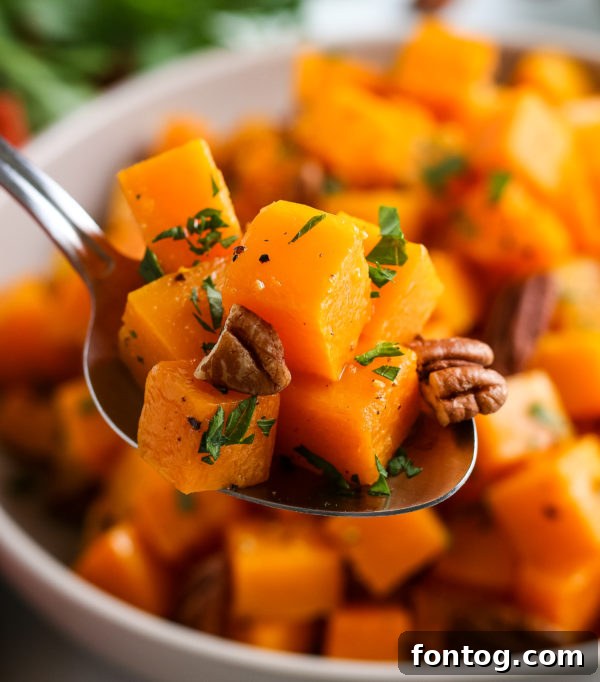
Serving Suggestions and Pairings
Roasted butternut squash is a truly versatile side dish that complements a wide array of main courses and can be incorporated into various culinary creations. Its sweet and savory profile makes it a natural fit for both hearty meats and lighter vegetarian options.
- Holiday Feasts: It’s a quintessential addition to Thanksgiving, Christmas, and other celebratory meals. Pair it with roasted turkey, glazed ham, or a classic pot roast.
- Everyday Dinners: Serve it alongside grilled chicken, baked salmon, pan-seared pork chops, or a simple steak for a nutritious and flavorful vegetable component.
- Salads and Grain Bowls: Add cooled roasted butternut squash to your favorite fall salads for a burst of color and sweetness. It’s also fantastic in warm grain bowls with quinoa, farro, or rice, combined with other roasted vegetables and a protein source.
- Vegetarian Mains: It can elevate vegetarian dishes like lentil shepherd’s pie, vegetable tarts, or even served simply with a rich mushroom gravy.
- Beyond a Side: Don’t limit it to just a side! Mash roasted butternut squash for a creamy puree, blend it into a velvety soup, or even use it as a base for pasta sauces.
Garnish with fresh herbs like parsley, rosemary, or sage before serving to add a touch of freshness and vibrant color. A sprinkle of toasted pecans or walnuts can also add a delightful crunch.
Frequently Asked Questions (FAQs) About Roasted Butternut Squash
Can I roast butternut squash without peeling it?
Yes, you technically can. The skin will soften during roasting, especially if diced small. However, for a smoother texture, most people prefer to peel it. If leaving the skin on, make sure to wash the squash thoroughly.
How do I store leftover roasted butternut squash?
Store any leftover roasted butternut squash in an airtight container in the refrigerator for up to 3-4 days. It reheats well in the microwave or a warm oven, or can be added cold to salads.
Can I prepare butternut squash ahead of time?
Absolutely! You can peel and cube the butternut squash up to 2-3 days in advance. Store the cubed squash in an airtight container or a resealable bag in the refrigerator. This saves time on busy cooking days.
What other seasonings can I use?
The possibilities are endless! Beyond salt and pepper, try:
- Sweet: Maple syrup, brown sugar, honey, cinnamon, nutmeg.
- Savory: Garlic powder, onion powder, smoked paprika, cumin, chili powder, curry powder.
- Herbal: Dried or fresh rosemary, thyme, sage, oregano.
Feel free to mix and match to create your perfect flavor profile!
Easy Roasted Butternut Squash Recipe
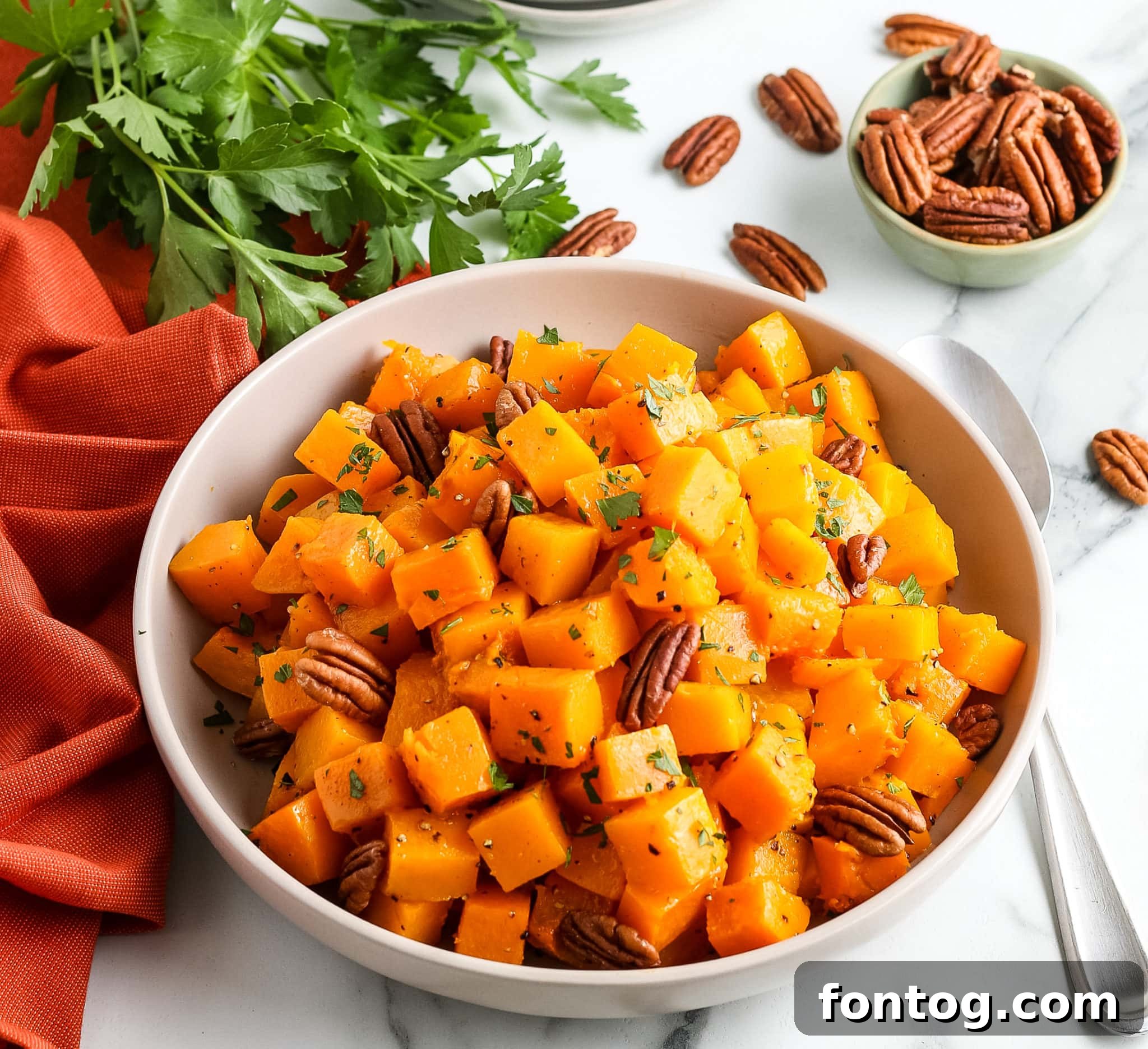
Created by: Kristy Still
Roasted Butternut Squash
A simple yet incredibly flavorful recipe for roasted butternut squash, perfect as an easy and healthy side dish for any meal!
Course: Side Dish, Vegetable
Cuisine: American
Servings: 4-6
Prep Time: 15 mins
Cook Time: 30 mins
Total Time: 45 mins
Pin Recipe
Ingredients
- 1 medium butternut squash (about 2-3 lbs), peeled, seeded, and cubed into 1-inch pieces
- 2-3 tablespoons olive oil
- ½ teaspoon salt, or to taste
- ¼ teaspoon black pepper, or to taste
- Optional: Fresh parsley or rosemary, chopped, for garnish
- Optional: 1 tsp dried rosemary or thyme, a pinch of cinnamon or nutmeg for added flavor
Instructions
- Preheat your oven to 400°F (200°C).
- Prepare the butternut squash: Carefully cut off both ends of the squash to create flat surfaces.
- Using a sturdy vegetable peeler or a sharp knife, peel off the tough outer skin of the squash.
- Cut the squash in half horizontally, usually just above the bulbous bottom section.
- Cut the portion with the seeds in half lengthwise and use a spoon to scoop out all the seeds and fibrous strands.
- Slice the solid top half of the squash into 1-inch thick planks, then cube them. Repeat with the bottom half, cutting into uniform 1-inch cubes.
- Place the cubed butternut squash pieces on a large baking sheet (or two if needed to avoid overcrowding). Drizzle generously with olive oil.
- Season with salt, black pepper, and any optional herbs or spices you choose (like dried rosemary or a pinch of cinnamon). Toss everything together thoroughly with your hands to ensure the squash is evenly coated.
- Spread the seasoned squash in a single layer on the baking sheet. This is crucial for caramelization and preventing steaming.
- Place the baking sheet in the preheated oven and cook for 15 minutes.
- Remove the baking sheet from the oven and carefully stir the squash pieces to promote even browning.
- Return to the oven and cook for another 10-15 minutes, or until the squash is fork-tender and beautifully caramelized with golden-brown edges.
- Garnish with fresh parsley or rosemary, if desired, and serve immediately. Enjoy this delightful fall side dish!
Nutrition
Serving: 1g | Calories: 35kcal | Carbohydrates: 4g | Fat: 2g | Polyunsaturated Fat: 2g | Sodium: 99mg | Fiber: 1g | Sugar: 1g
Your Culinary Journey Awaits!
Now that you have all the knowledge and the perfect recipe at your fingertips, you’re ready to create an unforgettable Roasted Butternut Squash dish that will impress everyone at your table. It’s more than just a side; it’s a celebration of seasonal flavors and healthy eating, packed into every caramelized bite.
We encourage you to make this recipe your own and share your culinary successes! If you whip up this delicious side, be sure to tag #mommyhatescooking on Instagram. Follow us for more delightful recipes and inspiration at @momhatescooking. Happy cooking!