Transform Your Home: A Step-by-Step Guide to Taking Carpeted Stairs to Stained Wood
Embarking on a home renovation journey can be both exciting and daunting. Since settling into our current home, we’ve tackled numerous updates, each project breathing new life into our living space. Our approach often begins with a spontaneous idea from me, which my incredibly handy husband then brings to life. I, of course, step back in for the crucial final touches that complete the vision.
I must admit, one of the most delightful surprises of marriage has been discovering just how talented my husband is with his hands. I can simply articulate an idea, a desire for “something like that,” and with remarkable efficiency, he makes it happen. He rarely adheres to a strict plan; instead, he navigates the process with an innate skill that consistently delivers impressive results. Given the endless stream of ideas flowing from my mind, having such a capable partner is an absolute blessing.
The Unexpected Urge: From Carpet to Raw Wood Dreams
Our latest major endeavor involved ripping up the old carpet in our office to replace it with sleek, new tile. It was during this dusty, transformative period that an undeniable urge struck me: the carpet on our stairs had to go too. My husband, understandably, was initially against this impulsive decision. He was already deeply immersed in the office project and knew that tackling the stairs would add months to our renovation timeline. However, my conviction was unshakeable. I was more than ready to live with raw, exposed wood rather than endure that tired, old carpet a moment longer.
So, with a surge of determination, and a little invaluable assistance from my dad, I got to work. The carpet was mercilessly ripped away, revealing the hidden potential beneath. The downside, as my husband had rightly predicted, was the time commitment. This project turned out to be our longest by far, stretching over a full six months. We typically complete home improvements within days, but the holiday season and various other commitments consistently pushed back our progress, making it incredibly challenging to find continuous work time.
The Gritty Details: Tackling Staples, Nails, and Imperfections
Once the carpet was gone, we were greeted with what felt like a minefield of old tacks and nails. This painstaking removal process was undoubtedly the most tedious and time-consuming part of the entire project. Each tiny piece had to be meticulously scraped, steamed, and cleaned from the stair treads and risers. This was followed by the sanding – oh, the glorious, dusty sanding! We aimed to sand the wood down as much as possible, yet I intentionally embraced a slightly rustic aesthetic, so I wasn’t bothered by a few minor imperfections or character marks on the wood. A good orbital sander, paired with various grits of sandpaper (starting coarse and moving to fine), was essential here to ensure a smooth, ready-to-stain surface.
Bringing Out the Beauty: Staining and Sealing for Durability
After the extensive preparation, it was finally time for the exciting part: staining. We opted for a rich, dark wood stain that we already had on hand, applying multiple coats to achieve the desired depth and warmth. Each coat was applied evenly, allowed to penetrate, and then wiped clean before the next application. This layering technique helped create a deep, lustrous finish that truly brought out the natural grain of the wood. To protect our newly beautiful stairs and ensure their longevity, we sealed them with a durable, glossy polyurethane finish. This protective layer not only enhances the wood’s appearance but also guards against daily wear and tear, making the stairs easy to clean and maintain for years to come.
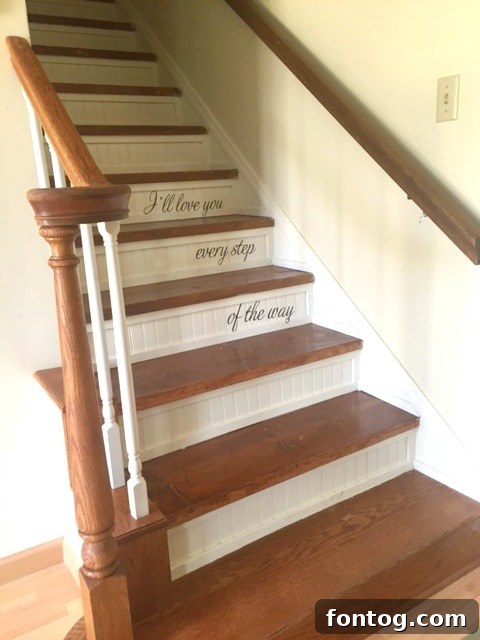
Interestingly, after the staining and sealing, the stairs remained in that state for several months. Life, as it often does, got in the way, and the project paused. But eventually, our motivation reignited, and we pushed through to the finish line. My husband meticulously cut and installed trim and bead board to complete the staircase design. This phase involved countless precise cuts and a considerable amount of caulking to ensure every joint and seam was perfectly finished. The attention to detail truly elevated the staircase from a simple functional element to a stunning focal point in our home.
The Finishing Touches: Paint, Decals, and Future Plans
With the trim and bead board expertly in place, we proceeded to paint all the new trim a crisp, clean white. This contrasting white trim beautifully highlights the dark stained wood, creating a classic and elegant look that brightens the entire area. To add a touch of personality and charm, we then applied decorative decals to the risers, providing a subtle yet impactful final flourish. While the main body of the stairs is now complete, we still have one minor task remaining: re-staining the handrails on both sides to match the new dark wood and touching up any areas that need attention. But beyond that, our dream staircase is officially finished!
I am absolutely thrilled with the outcome and incredibly glad I took the initiative to remove that carpet. The transformation is beyond what I imagined, adding immense character and value to our home.
Why Choose Stained Wood Stairs Over Carpet?
For those contemplating a similar project, the benefits of converting carpeted stairs to stained wood are numerous and compelling:
- Durability and Longevity: Wood stairs, especially when properly sealed, are incredibly durable and can withstand heavy foot traffic for decades. Unlike carpet, which can wear out, fray, and look dated quickly, wood retains its classic appeal.
- Ease of Cleaning and Maintenance: Hardwood stairs are significantly easier to clean than carpet. Dust, dirt, and spills can be wiped away effortlessly, making them a more hygienic choice for busy households. No more struggling with carpet cleaners or vacuuming tricky corners!
- Enhanced Aesthetics and Home Value: Stained wood stairs instantly elevate the aesthetic appeal of your home, offering a timeless and sophisticated look. This upgrade can also significantly increase your home’s resale value, as prospective buyers often prefer hardwood over carpet.
- Improved Air Quality: Carpet can trap allergens, dust mites, pet dander, and other pollutants, contributing to indoor air quality issues. Wood stairs provide a cleaner surface, which can be particularly beneficial for individuals with allergies or asthma.
- Versatility in Design: With wood, you have endless options for stain colors, finishes, and the addition of runners or decorative elements. This allows for greater customization to match your home’s unique style.
Essential Tools and Materials for Your DIY Stair Renovation
To successfully tackle a project like this, having the right tools and materials is crucial. Here’s a breakdown of what you’ll likely need:
- For Carpet Removal: Utility knife, heavy-duty pry bar, pliers (for stubborn staples), hammer.
- For Preparation: Floor scraper, putty knife, orbital sander, detail sander (for corners), various grit sandpaper (60, 80, 120, 150, 220), wood filler, shop vacuum, tack cloth.
- For Staining & Sealing: Wood stain (your chosen color), natural-bristle brushes or foam applicators, clean rags, polyurethane or clear coat sealer (oil-based for durability), mineral spirits for cleanup.
- For Trim & Finishing: Miter saw (for precise cuts), caulk gun, painter’s caulk, measuring tape, level, painter’s tape, high-quality primer, interior paint (for risers and trim).
- Safety Gear: Work gloves, dust mask or respirator, safety glasses, knee pads.
Key Lessons Learned from Our Staircase Transformation
Our six-month journey taught us invaluable lessons that might help you with your own home improvement endeavors:
- Patience is a Virtue: Large DIY projects, especially those involving multiple steps and drying times, rarely get done overnight. Embrace the process and don’t get discouraged by delays.
- Preparation is Paramount: The meticulous removal of every tack and thorough sanding are non-negotiable. Skipping these steps will compromise the final finish and durability of your stained wood stairs.
- Teamwork Makes the Dream Work: While I initiated the idea, my husband’s skills were essential. Whether it’s a partner, a friend, or even a professional for certain aspects, don’t be afraid to enlist help.
- Embrace Minor Imperfections: For a rustic or natural look, minor imperfections can add character. Deciding what you can live with versus what needs perfect remediation can save a lot of time and stress.
- Don’t Rush Drying Times: This is critical for stain and especially for polyurethane. Rushing can lead to tacky surfaces, uneven finishes, or even damage that requires redoing the work.
A DIY Project Worth the Effort: Our Final Thoughts
Transforming our carpeted stairs into beautiful stained wood treads was a journey filled with hard work, patience, and a few unexpected detours. Despite the extended timeline, the satisfaction of seeing our vision come to life has been immense. The stairs are now a testament to our perseverance and a beautiful, functional centerpiece of our home. If you’re considering a similar DIY stair remodel, we wholeheartedly encourage you to take the leap. The effort is significant, but the enduring beauty and increased value it brings to your home are truly worth every scrape, sand, and stain.