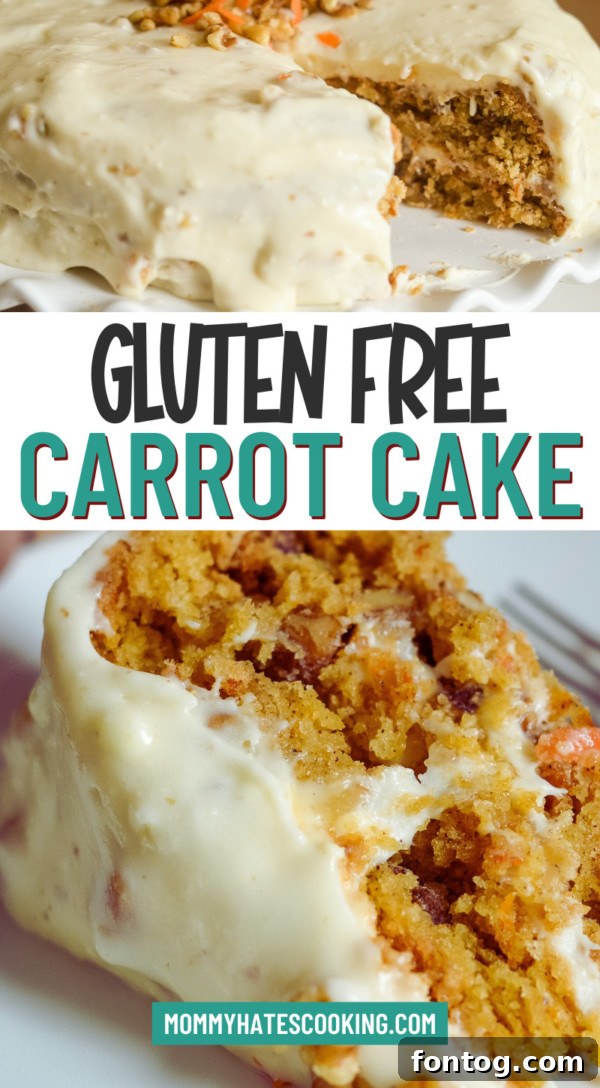
Timeless Delight: A Classic Gluten-Free Carrot Cake with Luscious Cream Cheese Frosting
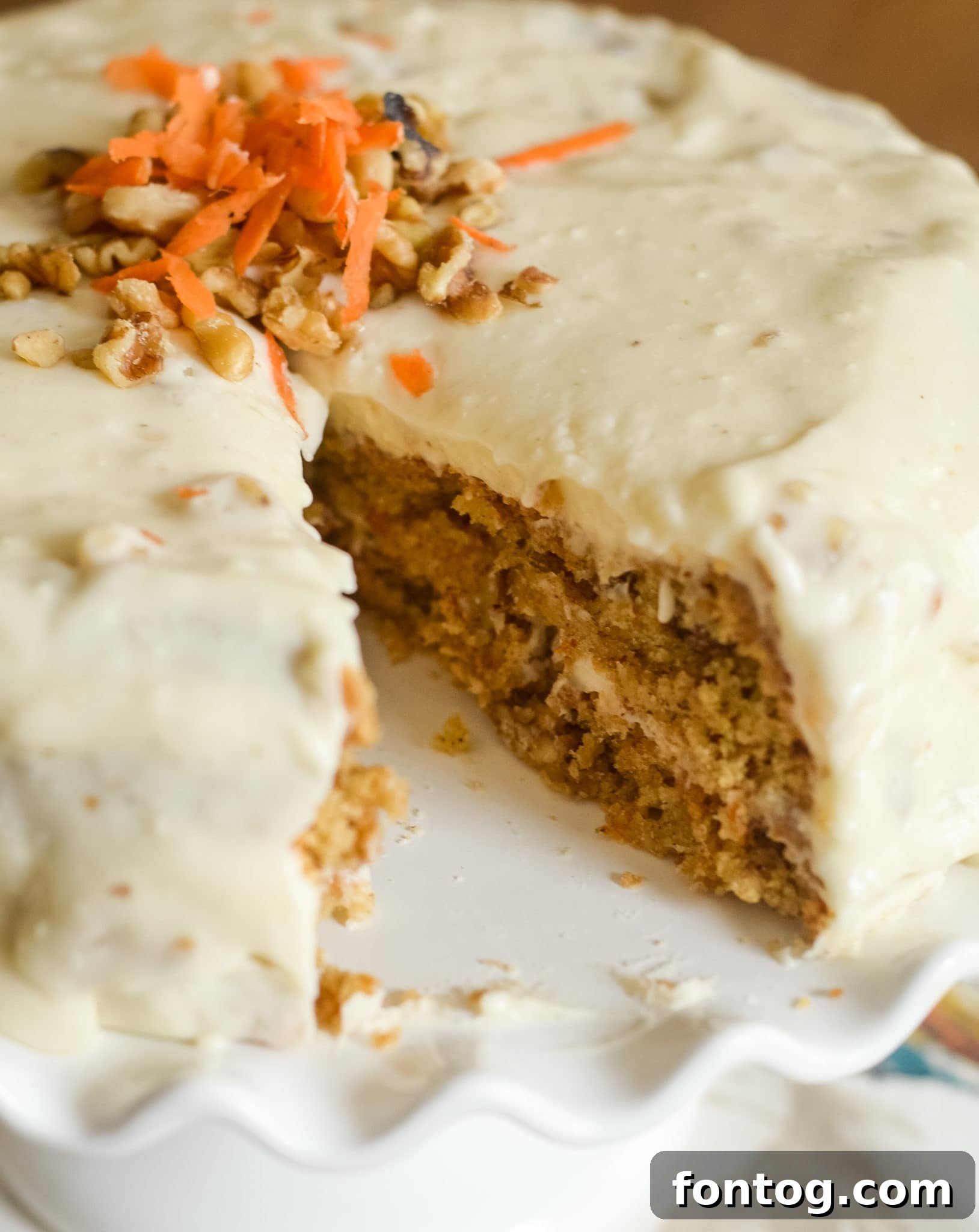
Indulge in a truly timeless classic with our exquisite Gluten-Free Carrot Cake, perfectly crafted for your next special occasion or simply to brighten a weeknight. This recipe isn’t just a dessert; it’s a piece of culinary history, thoughtfully adapted from a beloved Depression-era staple to cater to modern dietary needs without sacrificing any of its original charm or flavor. It’s the ultimate family treat that promises warmth, comfort, and pure delight with every single bite.
The history of carrot cake stretches back to the Middle Ages, when carrots were often used as a sweetener in desserts due to the scarcity and expense of sugar. However, the iteration of carrot cake we know and love today—rich with spices, moist carrots, crunchy nuts, and a decadent cream cheese frosting—truly gained its widespread popularity during challenging times like the Great Depression and World War II. During these eras, sugar rationing made carrots an invaluable ingredient, as their natural sweetness provided a much-needed indulgence. This ingenious use of readily available carrots transformed a simple vegetable into the star of a beloved dessert.
Our particular recipe holds a special place, having been passed down through generations from that very Depression Era. We’ve meticulously adapted it to be a fantastic Gluten-Free Carrot Cake, ensuring that those with gluten sensitivities can still enjoy this cherished family tradition. The adaptation is seamless, preserving the cake’s characteristic moistness and aromatic spice blend.
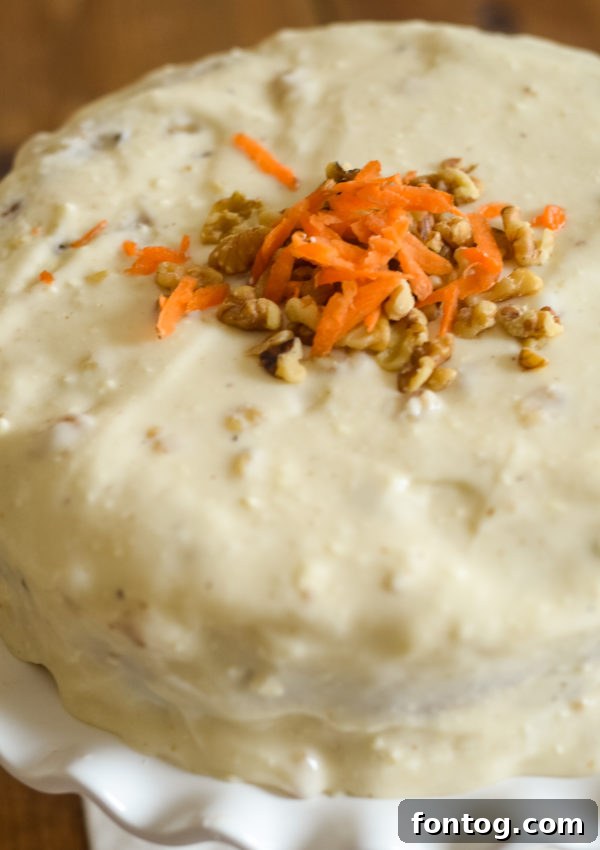
This delightful recipe prides itself on using straightforward pantry ingredients, making it accessible and easy to prepare. With minimal prep time, you can whip up this impressive dessert for significant holidays like Easter, Thanksgiving, or Christmas, or even as a comforting end to a casual weeknight meal. Its versatility and irresistible flavor make it a perennial favorite in any household.
Essential Ingredients for Your Gluten-Free Carrot Cake and Frosting
Crafting the perfect gluten-free carrot cake involves a thoughtful selection of ingredients, ensuring both an incredible taste and a satisfying texture. Here’s a breakdown of what you’ll need to bring this moist and flavorful cake to life, complete with its signature tangy cream cheese frosting:
For the Gluten-Free Carrot Cake:
- Granulated Sugar: Provides the primary sweetness and contributes to the cake’s tender crumb.
- Vegetable Oil: Key for a truly moist cake, as it remains liquid at room temperature, unlike butter, keeping the cake soft longer.
- Hot Water: Helps activate the baking soda and adds a touch of moisture without thinning the batter too much.
- Eggs: Act as a binder, add richness, and help the cake rise.
- Baking Soda: A leavening agent that reacts with acidic ingredients (if present) to create a light texture.
- Gluten-Free All-Purpose Flour: The foundation of our gluten-free adaptation. Choose a 1:1 blend for best results.
- Cinnamon: The quintessential spice for carrot cake, offering warm, aromatic notes.
- Baking Powder: Another leavening agent, working alongside baking soda for optimal lift and airiness.
- Nutmeg: Adds a subtle, earthy warmth that complements the cinnamon beautifully.
- Pinch of Salt: Enhances all the other flavors, balancing the sweetness.
- Grated Carrots: The star ingredient, providing natural sweetness, moisture, and a vibrant color.
- Walnuts: (Optional, but highly recommended) Adds a delightful crunch and nutty flavor that pairs perfectly with carrots and spices.
For the Cream Cheese Frosting:
- Unsalted Butter (Softened): Forms the rich, creamy base of the frosting. Softening it ensures a smooth, lump-free texture.
- Cream Cheese (Softened): Provides the iconic tangy flavor and creamy consistency that makes carrot cake frosting so irresistible.
- Vanilla Extract: Enhances the overall flavor profile of the frosting.
- Powdered Sugar: The primary sweetener for the frosting, dissolving easily for a smooth finish.
- Walnuts: (Optional) For garnish and an extra layer of texture.
Each ingredient plays a crucial role in creating a harmonious balance of flavors and textures, resulting in a carrot cake that tastes just as good, if not better, than its traditional counterpart.
Choosing the Right Gluten-Free Flour for Your Carrot Cake
When baking gluten-free, the choice of flour is paramount, and for this carrot cake recipe, an all-purpose gluten-free flour blend is essential. The key characteristic to look for is a “1:1 ratio” or “cup-for-cup” blend. This means the gluten-free flour can be directly substituted for traditional wheat flour in equal measurements, making adaptation incredibly straightforward. These blends are specifically formulated to mimic the properties of wheat flour, ensuring your baked goods have the right structure, texture, and moisture.
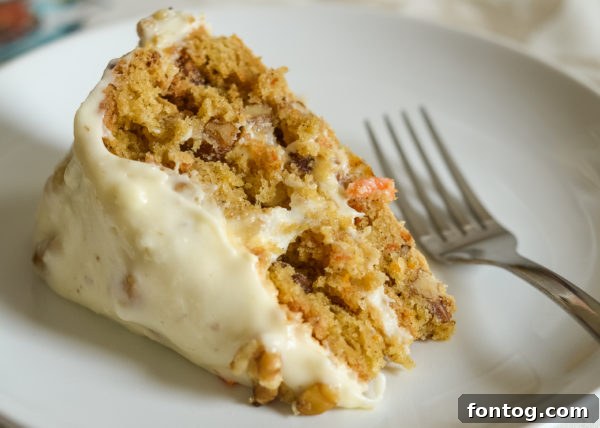
Many reliable brands offer excellent 1:1 gluten-free all-purpose flour blends. Some of our favorites include King Arthur Gluten-Free All-Purpose Flour, Better Batter, Cup4Cup, and Bob’s Red Mill Gluten-Free 1-to-1 Baking Flour. These brands consistently deliver fantastic results in gluten-free baking.
A significant advantage of using these pre-mixed 1:1 blends is that they typically already contain xanthan gum. Xanthan gum is a crucial ingredient in gluten-free baking as it acts as a binder, providing elasticity and structure that gluten would normally offer. Since it’s already included in these blends, you won’t need to add any extra, simplifying the recipe further. If your chosen blend does not contain xanthan gum, you’ll need to add about ½ teaspoon per cup of gluten-free flour, but this is rare for 1:1 blends.
Of course, if dietary restrictions aren’t a concern for you or your guests, you can easily prepare this classic carrot cake using regular all-purpose wheat flour. The recipe is versatile enough to accommodate both options seamlessly, allowing everyone to enjoy this delicious dessert.
Fresh or Pre-Grated Carrots: What’s Best for Carrot Cake?
The carrots are the heart of a carrot cake, providing its signature sweetness, color, and moisture. For this recipe, finely grated carrots are essential, as they soften beautifully during baking, integrating seamlessly into the cake’s tender crumb without being overtly chunky.
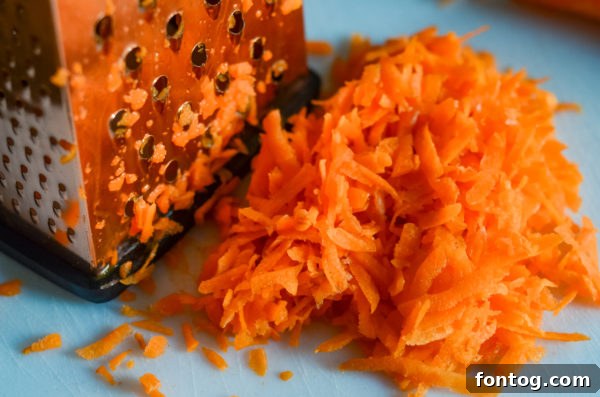
You have a couple of excellent options for preparing your carrots. The most traditional and often preferred method is to use fresh, raw carrots and grate them yourself. Using a handheld grater or a food processor with a grating attachment allows you to control the fineness of the shred. Freshly grated carrots tend to be more moist and flavorful, contributing significantly to the cake’s overall quality and texture. Their natural moisture helps keep the cake wonderfully tender.
Alternatively, for convenience, you can absolutely purchase pre-grated carrots from your local grocery store. These save a significant amount of prep time and work just as well in the recipe. If using pre-grated carrots, ensure they are finely shredded and relatively fresh to maximize moisture content. Whichever method you choose, the goal is finely grated carrots that will melt into the cake, infusing it with their earthy sweetness.
Expert Tips for Baking the Perfect Gluten-Free Carrot Cake
Baking a successful gluten-free carrot cake involves a few key techniques that ensure a moist, fluffy, and perfectly baked result. Paying attention to these details will elevate your cake from good to truly exceptional.
1. Immaculate Pan Preparation: The Foundation of Success
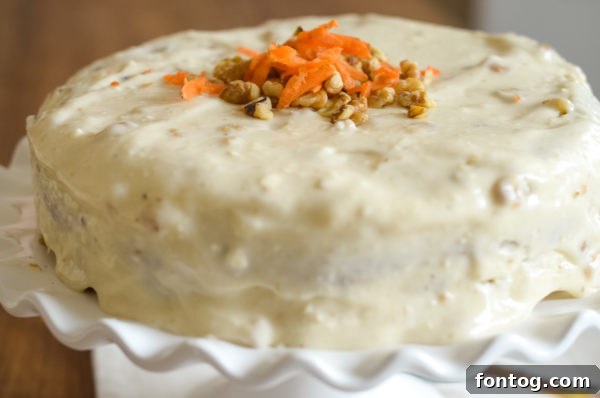
The most critical step in ensuring your cake releases cleanly from the pans is meticulous preparation. For gluten-free baking, this is even more crucial because gluten-free batters can sometimes be stickier. Simply spraying with a regular baking spray isn’t always enough, as many contain wheat flour as a release agent. Instead, thoroughly grease your two 8-inch round cake pans with butter or shortening, then dust them generously with gluten-free flour. Tap out any excess flour. A helpful guide on how to grease and flour baking pans provides excellent visual instructions. Alternatively, lining the bottoms of the pans with parchment paper after greasing, then lightly greasing and flouring the parchment, creates an almost foolproof non-stick surface. Using a dedicated nonstick cooking spray that is clearly labeled “gluten-free” is also an option.
2. Mixing Your Batter to Perfection
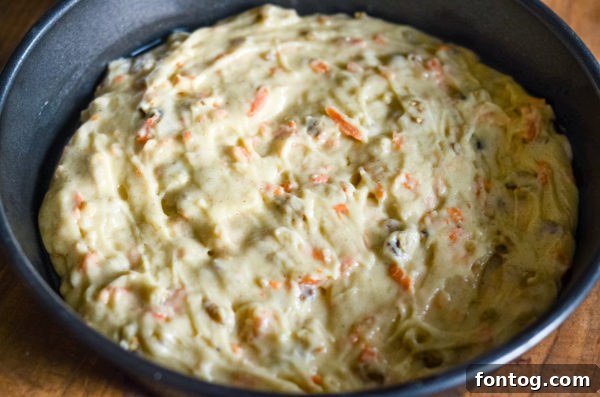
Begin by combining your granulated white sugar with the wet ingredients: vegetable oil, hot water, and eggs. Mix these until well combined and lightened. In a separate bowl, whisk together all your dry ingredients – the gluten-free all-purpose flour, baking soda, cinnamon, baking powder, nutmeg, and a pinch of salt. Gradually add the dry ingredients to the wet ingredients, mixing until just combined. Overmixing gluten-free flour can sometimes lead to a tougher texture, so mix until no streaks of dry flour remain. This cake can be mixed efficiently in an electric stand mixer or by hand with a whisk and a large mixing bowl for a more traditional approach.
3. Incorporating Carrots and Walnuts
The grated carrots and chopped walnuts (if using) should be gently folded into the batter last. This ensures they are evenly distributed without being broken down too much by mixing. The resulting cake batter will be relatively thick but spreadable. Divide the batter evenly between your two prepared 8-inch round cake pans, using an offset spatula to spread it smoothly to the edges.
4. Achieving the Perfect Bake
Bake the cakes in a preheated oven at 350°F (175°C) for approximately 35 minutes. Baking times can vary depending on your oven, so keep an eye on them. The cakes are done when they are golden brown on top, spring back lightly when gently touched, and a toothpick inserted into the center comes out clean. Avoid opening the oven door too frequently during the initial baking phase to prevent the cakes from sinking.
5. Cooling for Optimal Frosting
Once baked, allow the cakes to cool in their pans for about 10-15 minutes. This brief cooling period helps the cake firm up, making it easier to handle. After this initial cooling, carefully invert the cakes onto a wire rack or cooling rack. Allow them to cool completely for 1-2 hours before even thinking about frosting. Rushing this step will result in melted frosting and a messy cake. A fully cooled cake ensures your cream cheese frosting will set beautifully.
Following these tips will result in a perfectly moist, dense yet tender, and incredibly flavorful gluten-free carrot cake that everyone will adore. The rich aroma of spices filling your kitchen is just a bonus!
Tips for Making the Silky Cream Cheese Frosting Recipe
The cream cheese frosting is the crowning glory of any carrot cake, and this recipe delivers a perfectly balanced, tangy-sweet complement to the rich cake. Achieving a smooth, spreadable frosting is key, and a few simple tips will ensure success.
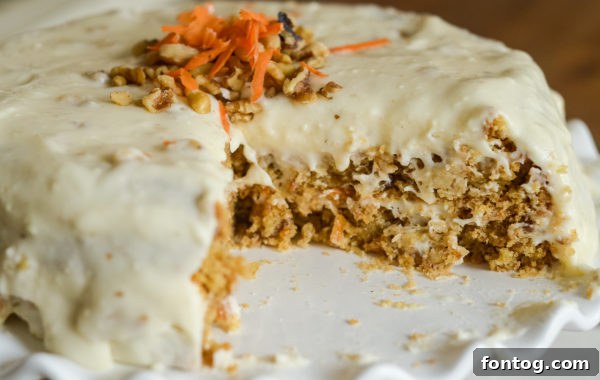
1. Room Temperature is Non-Negotiable
The most crucial tip for a perfectly smooth frosting is to ensure both your unsalted butter and cream cheese are at proper room temperature. This means they should be soft enough to indent easily with a finger but not greasy or melted. If they are too cold, your frosting will be lumpy and difficult to spread. If they are too warm, the frosting can become runny. About 30-60 minutes out of the fridge is usually sufficient, depending on your kitchen’s temperature.
2. The Crumb Coat Advantage
The frosting recipe provided yields enough to generously frost your two-layer cake. However, for a professional-looking finish, especially with a moist cake like carrot cake, a “crumb coat” is highly recommended. A crumb coat is a thin layer of frosting applied to the cake to seal in any loose crumbs. If you plan on doing a crumb coat followed by a final, thicker layer of frosting, it’s best to double the cream cheese frosting recipe. Apply a thin layer, refrigerate the cake for 20-30 minutes until firm, then apply your final coat. This technique ensures a pristine outer layer of frosting.
3. Mixing for Maximum Smoothness
Combine the softened butter and cream cheese in the bowl of an electric stand mixer fitted with the whisk attachment, or use an electric hand mixer in a large mixing bowl. Beat on medium-high speed until the mixture is light, fluffy, and completely smooth, with no lumps of butter or cream cheese remaining. This usually takes 2-3 minutes. Then, gradually add the vanilla extract and powdered sugar, starting on a low speed to avoid a sugar cloud, then increasing to medium-high until the frosting is light, airy, and well combined. Scrape down the sides of the bowl as needed.
4. Chilling for Stability (If Needed)
If your kitchen is warm or if you’ve doubled the recipe and are waiting to apply the second coat, you can store the frosting in the fridge. Simply cover the bowl with plastic wrap to prevent a crust from forming. If chilled for more than 30 minutes, you may need to let it soften slightly at room temperature or beat it again for a minute or two to restore its spreadable consistency.
5. Creative Garnishing Options
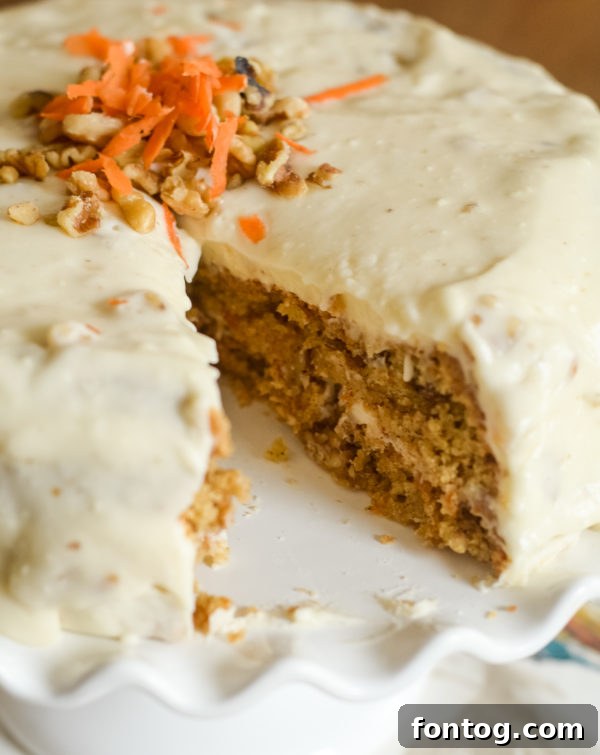
After frosting your cake, consider adding a beautiful garnish. Chopped walnuts are a classic choice and can be sprinkled around the edges or over the entire top. If you prefer, pecans make an excellent substitute, or you can use your nut of choice. For a touch of elegance, consider thinly sliced or julienned fresh carrots, or even small candied carrot curls, along with a sprinkle of orange zest. These additions not only enhance the visual appeal but also add another layer of texture and flavor.
How to Store Leftover Gluten-Free Carrot Cake for Freshness
One of the joys of baking a delicious cake like this Gluten-Free Carrot Cake is enjoying leftovers! Proper storage is key to maintaining its incredible moisture and flavor for as long as possible. Due to the cream cheese frosting, refrigeration is necessary.
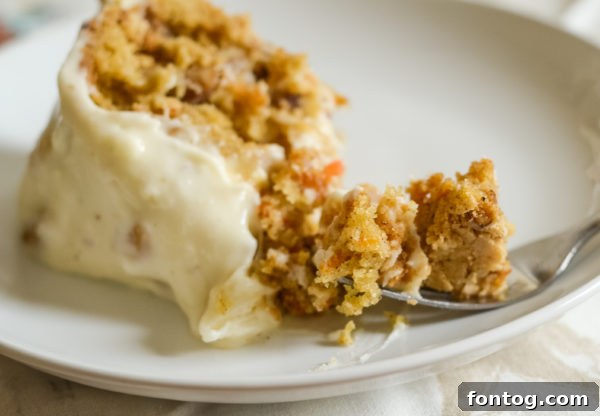
Refrigeration:
Once the cake has completely cooled and been frosted, any leftover slices should be stored in an airtight container. If you have an entire remaining cake, you can cover it loosely with plastic wrap first, then place it in a cake carrier or a large airtight container. Alternatively, individual slices can be wrapped snugly in plastic wrap before being placed in a container. Stored this way, the Gluten-Free Carrot Cake will remain wonderfully moist and delicious in the fridge for up to 5 days. For best flavor, allow chilled slices to sit at room temperature for about 15-30 minutes before serving.
Freezing:
For longer-term storage, this carrot cake freezes beautifully. To freeze, wrap individual slices or larger portions of the cake (without frosting, if possible, or very firmly wrapped if frosted) tightly in plastic wrap, then again in aluminum foil to prevent freezer burn. Place the wrapped cake pieces in a freezer-safe storage bag or container. It can be stored in the freezer for up to 3 months. When you’re ready to enjoy a slice, simply thaw it in the refrigerator overnight or at room temperature for a few hours. This makes it perfect for having a treat ready whenever a craving strikes!
Free Easter Word Search:
FREE Easter Word Search!
Sign up NOW to receive your FREE Easter Word Search!
Thank you!
Please check your email for your download!
If you’d like an INSTANT Download Easter Word Search Printable, just fill out this form, and it’ll be sent directly to your inbox!
If you’re enchanted by this Gluten-Free Carrot Cake, be sure to explore its versatility in other delightful forms! You can easily adapt the same delicious concept to create Gluten-Free Carrot Cake Cupcakes. These individual portions are perfect for parties or when you want a smaller, personal treat. And for those who love to experiment with kitchen gadgets, don’t miss our Ninja Foodi Carrot Cake recipe, offering a convenient way to bake this classic in your multi-cooker.
This Gluten-Free Carrot Cake is more than just a dessert; it’s a testament to enduring culinary tradition, reimagined for modern dietary needs. Its rich, moist texture and perfectly spiced flavor, crowned with a luscious cream cheese frosting, will undoubtedly make it a proven winner in your household for Easter desserts, special occasions, or any time you crave a truly comforting treat. Enjoy the wonderful, classic flavors of this easy-to-make carrot cake, a recipe that has truly stood the test of time and promises to be a favorite for generations to come.
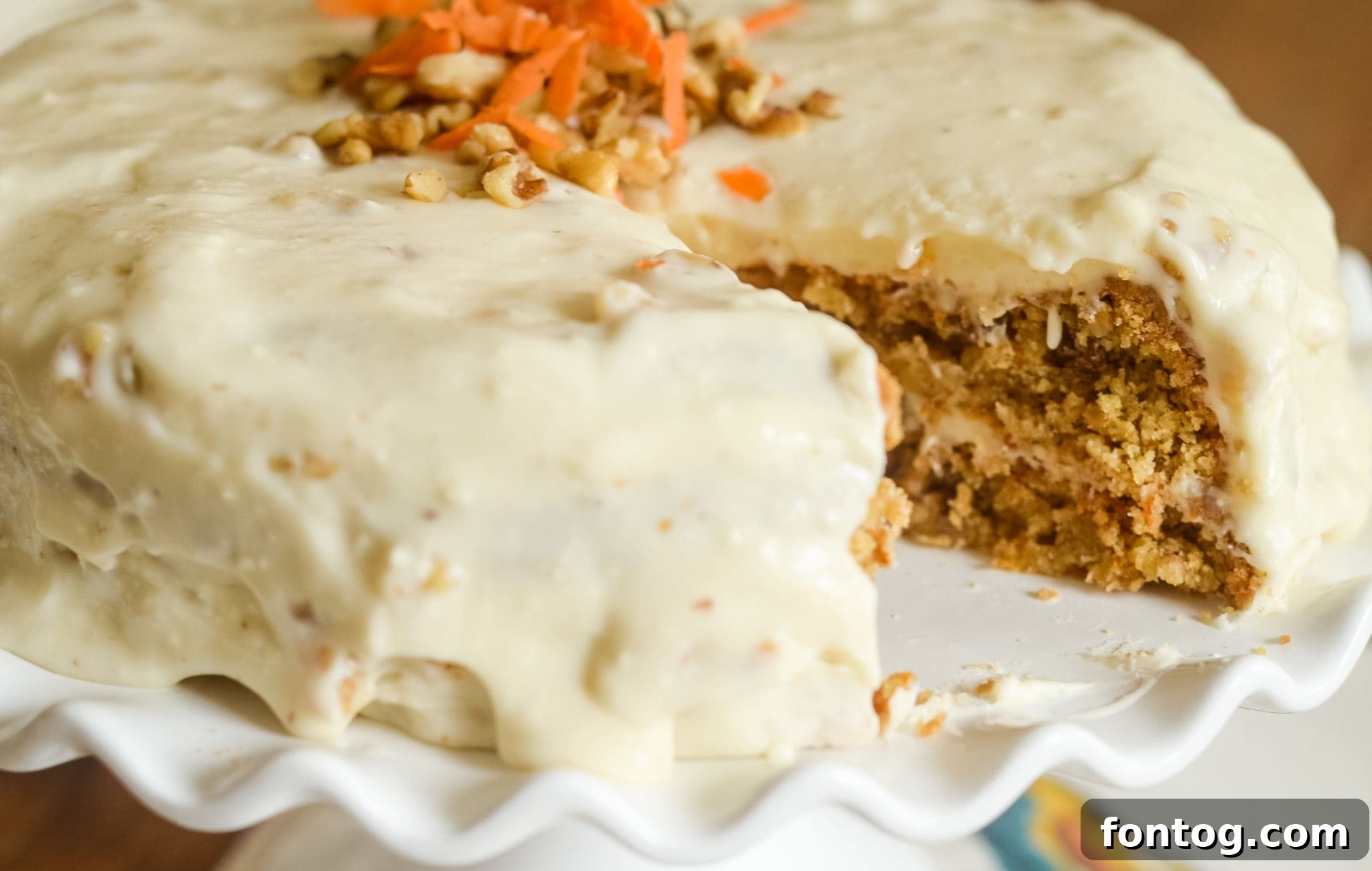
Gluten Free Carrot Cake
Ingredients
Cake
- 1 ½ Cups Granulated Sugar
- 1 Cup Vegetable Oil
- 2 ½ Tbsp Hot Water
- 3 Eggs
- 1 Tsp Baking Soda
- 1 ½ Cups Flour or Gluten Free All Purpose Flour
- 1 Tsp Cinnamon
- 1 Tsp Baking Powder
- ¼ Tsp Nutmeg
- Pinch of Salt
- 1 Cup Grated Carrots
- 1 Cup Walnuts
Frosting (Double if Preferred – See Note)
- 1 Stick Unsalted Butter Softened
- 1 Package Cream Cheese Softened
- 1 Tsp Vanilla
- 3 ½ Cups Powdered Sugar
- 1/2 Cup Walnuts
Instructions
-
Preheat the oven to 350°F (175°C) and thoroughly grease two 8-inch round cake pans. Ensure pans are well prepared by greasing and flouring (with GF flour) or using parchment paper and baking spray. Refer to the pan preparation section in the post for detailed instructions.
-
In a large bowl, mix the wet cake ingredients (granulated sugar, vegetable oil, hot water, eggs). In a separate bowl, whisk together the dry ingredients (baking soda, gluten-free all-purpose flour, cinnamon, baking powder, nutmeg, pinch of salt). Gradually add the dry ingredients to the wet, mixing until just combined.
-
Gently fold in the grated carrots and walnuts until evenly distributed. Avoid overmixing.
-
Divide the thick batter evenly between the two prepared cake pans, spreading it out smoothly with a spatula.
-
Bake in the preheated oven at 350°F (175°C) for 35 minutes, or until a toothpick inserted into the center comes out clean.
-
Allow the cakes to cool in their pans for 10-15 minutes. Then, carefully invert them onto a wire rack to cool completely for 1-2 hours before frosting.
-
While the cakes are cooling, prepare the cream cheese frosting: In a large mixing bowl, cream together the softened butter and softened cream cheese until smooth and fluffy.
-
Add in the vanilla extract and gradually mix in the powdered sugar on low speed, then increase to high until the frosting is light and smooth.
-
Gently fold in the walnuts for the frosting, if using.
-
Once the cakes are completely cool, place one layer on your serving platter. Spread about one-third of the frosting evenly over the top.
-
Carefully place the second cake layer on top. Use the remaining frosting to cover the top and sides of the entire cake, smoothing with an offset spatula.
-
As noted, if you prefer a crumb coat, use a portion of the frosting for a thin first layer, chill, then apply the rest of the frosting for the final coat.
-
The cake can be chilled in the fridge and served cold, or allowed to come to room temperature before serving for a softer texture.
Video
Notes
To achieve this effect, apply the crumb coat and then place the cake in the fridge for approximately 30 minutes to 1 hour to allow it to firm up. Once chilled, proceed with applying the second, final coat of frosting. This method ensures a pristine, professional-looking cake.
Nutrition
Did You Make This Recipe?
Make sure to tag #mommyhatescoooking on Instagram and follow for more @momhatescooking
Pin Recipe
Share on Facebook