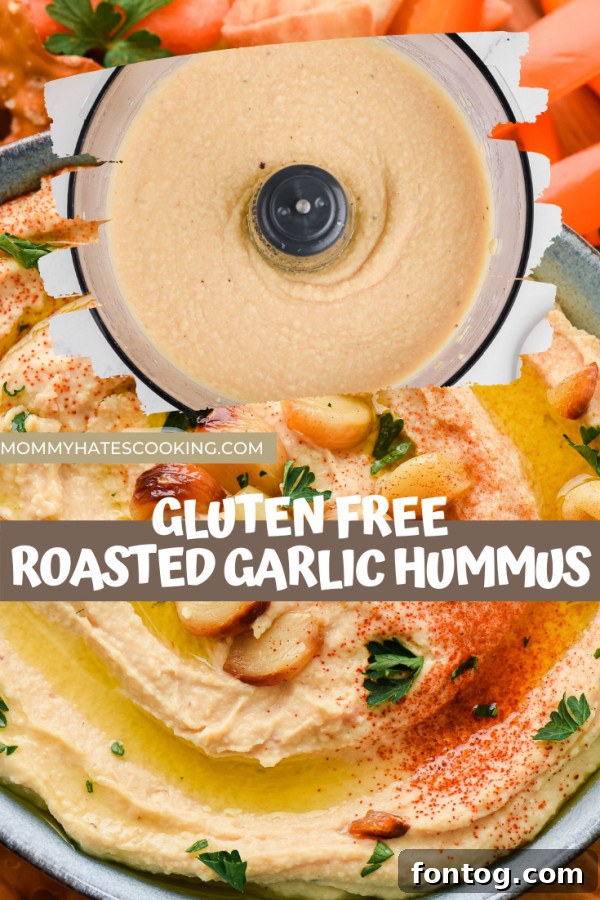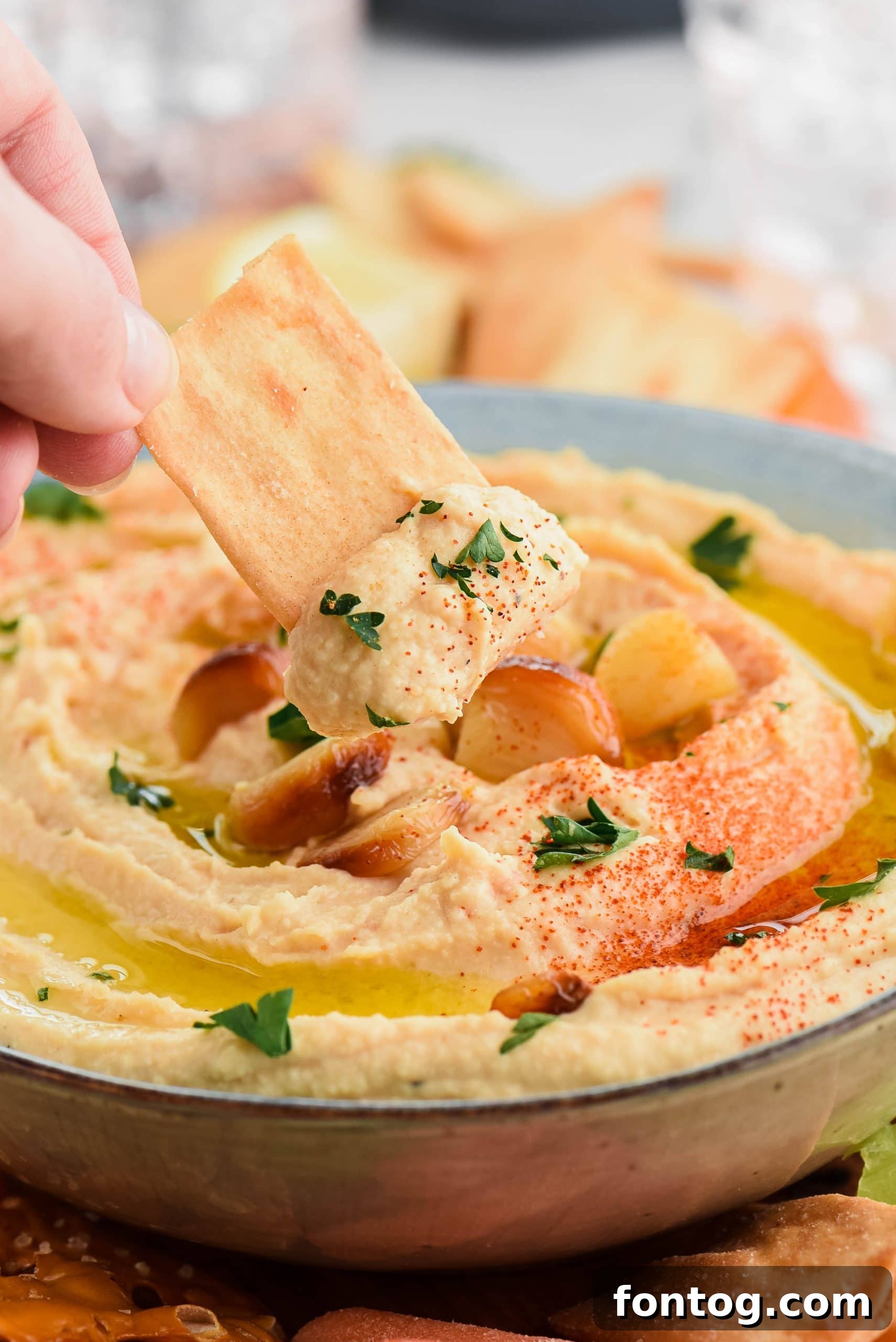
Crafting the Ultimate Roasted Garlic Hummus: A Naturally Gluten-Free Delight
For those seeking a delectable, healthy, and incredibly easy snack, look no further than homemade hummus. But why settle for ordinary when you can elevate your culinary experience with the rich, aromatic depth of Roasted Garlic Hummus? This naturally gluten-free dip is not just a snack; it’s a versatile, flavor-packed staple that promises to transform your snacking habits and add a touch of Mediterranean flair to any meal.
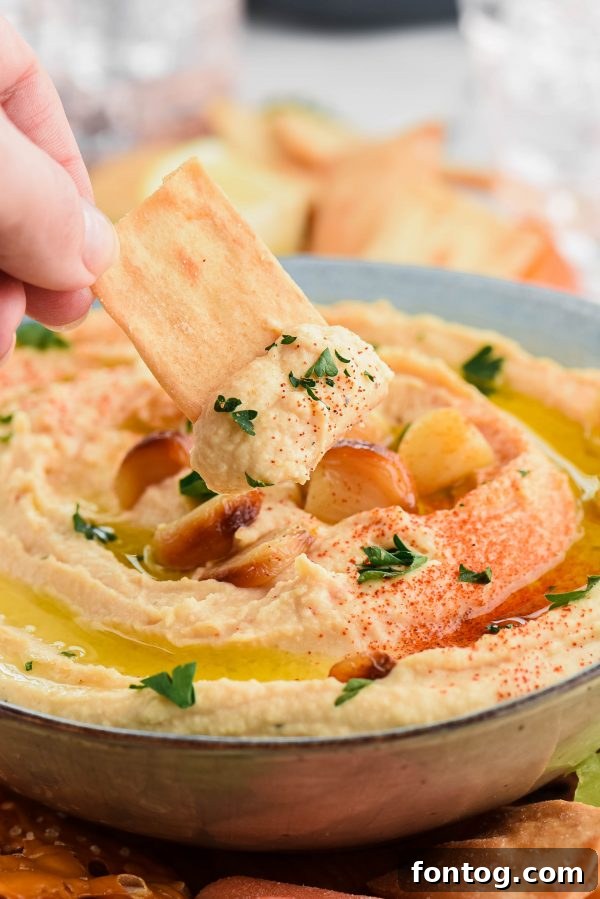
Hummus, derived from the Arabic word for chickpeas, has been a cornerstone of Middle Eastern cuisine for centuries. Its simple yet profound blend of ingredients creates a creamy, earthy, and satisfying dip that pairs beautifully with almost anything. By infusing it with the sweet, caramelized notes of roasted garlic, we unlock a new dimension of flavor that is both comforting and sophisticated. This guide will walk you through creating the best easy snack, ensuring it’s not only delicious but also caters to a gluten-free lifestyle.
Why Roasted Garlic Hummus Stands Out: A Flavorful and Healthy Choice
In a world full of processed snacks, roasted garlic hummus emerges as a vibrant, wholesome alternative. It’s a “better-for-you” option that doesn’t compromise on taste. The magic of roasted garlic truly sets this hummus apart. Unlike raw garlic, which can be pungent and sharp, roasting transforms the cloves into a mellow, buttery, and slightly sweet delicacy. This transformation infuses the hummus with a depth that is both incredibly appealing and wonderfully complex.
The Irresistible Flavor Profile
The roasting process caramelizes the natural sugars in garlic, resulting in a distinctly sweet, nutty, and slightly smoky flavor. When blended into hummus, this creates a dip that is intensely aromatic and incredibly smooth, without any of the harshness often associated with raw garlic. It’s a gourmet touch that makes this hummus feel indulgent while remaining incredibly simple to prepare.
Health Benefits of Hummus
Beyond its incredible taste, roasted garlic hummus offers a wealth of health benefits, making it an ideal component of a balanced diet. The primary ingredient, chickpeas, are nutritional powerhouses. They are naturally rich in:
- Protein: Essential for muscle repair and growth, and helps keep you feeling full.
- Dietary Fiber: Promotes digestive health, helps regulate blood sugar levels, and contributes to satiety.
- Vitamins and Minerals: Including folate, iron, magnesium, potassium, and B vitamins.
Combined with healthy fats from olive oil and tahini, hummus is a fantastic source of sustained energy, making it a perfect pre-workout snack or a satisfying mid-day bite. Plus, it’s naturally gluten-free, catering to a wide range of dietary needs without special modifications.
The Core Ingredients of Hummus Unveiled
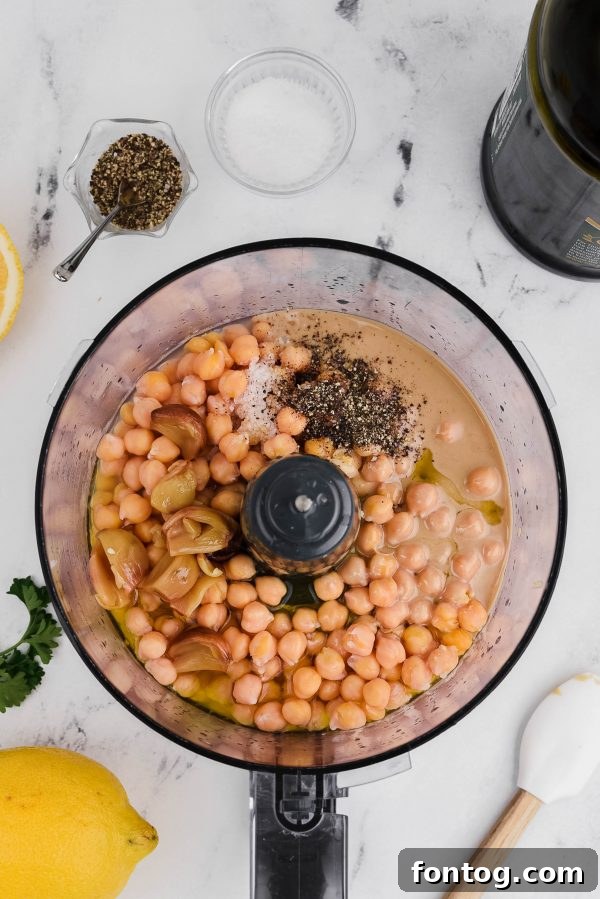
At its heart, hummus is a celebration of simple, wholesome ingredients. Understanding each component not only helps in making the best hummus but also allows for creative variations.
Chickpeas: The Heart of Hummus
The foundation of all hummus recipes is chickpeas, also universally known as garbanzo beans. These terms are interchangeable and refer to the same versatile legume. Chickpeas are valued for their creamy texture when cooked and their impressive nutritional profile. They contribute significantly to the hummus’s body and earthy flavor.
Most homemade hummus recipes, including this one, utilize canned chickpeas for convenience. You can easily find these in the canned bean aisle of any grocery store. Always remember to thoroughly drain and rinse canned chickpeas before use. This removes excess sodium and any canning liquid, ensuring a fresh, clean taste for your hummus.
Tahini: The Creamy Secret
Another indispensable ingredient is tahini, a paste made from ground sesame seeds. It’s akin to nut butter but with a distinct, slightly bitter, and nutty flavor that is crucial for authentic hummus. Tahini provides that signature creaminess and a depth of flavor that can’t be replicated by other ingredients. You’ll typically find tahini in the international or ethnic foods aisle of your local supermarket. When selecting tahini, look for brands made with toasted sesame seeds, as these tend to impart a richer, more complex flavor and contribute to the hummus’s characteristic light brown hue. As a helpful tip, especially if you’re following a specific diet, always double-check the ingredient list to ensure it’s gluten-free if that’s a dietary requirement.
The Star Ingredient: Roasted Garlic
The element that truly elevates this recipe is, of course, the roasted garlic. Roasting whole heads of garlic transforms their pungent, raw bite into a sweet, mellow, and spreadable pulp. This process tenderizes the cloves and brings out their inherent sweetness, creating a complex flavor that is both deep and subtly savory. Roasting garlic is a simple step, yet it’s the secret to the irresistible aroma and exquisite taste of this hummus.
Other Essential Components: Olive Oil, Lemon, Salt, and Pepper
Completing the classic hummus ensemble are a few more vital ingredients. High-quality olive oil, preferably extra virgin, not only contributes healthy fats but also adds a fruity, peppery note and helps achieve that luscious texture. Fresh lemon juice is essential for balancing the richness of the chickpeas and tahini, providing a bright, tangy lift that awakens the palate. Finally, a dash of salt and freshly ground black pepper enhances all the other flavors, bringing the hummus to perfect harmony.
Mastering the Art of Homemade Roasted Garlic Hummus
Making your own roasted garlic hummus is a straightforward process, but a few key tips can elevate your homemade dip from good to absolutely outstanding.
Tips for a Silky Smooth Texture
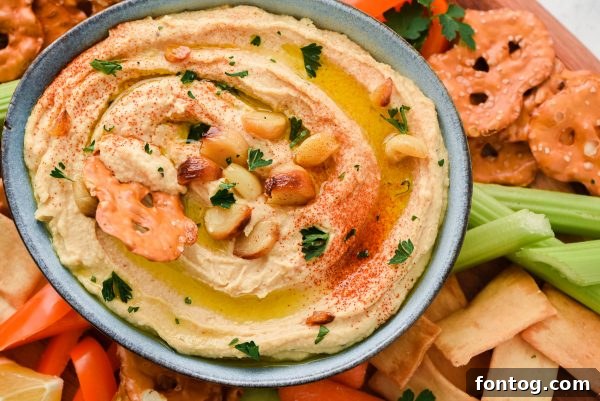
Achieving that coveted silky-smooth hummus texture is easier than you might think. One crucial tip is to warm your chickpeas before processing. Placing the drained and rinsed chickpeas in a microwave-safe bowl with a couple of tablespoons of water, covering them with a wet paper towel, and microwaving for about 90 seconds helps soften them further. This allows them to blend more easily into a creamy consistency. Additionally, don’t rush the blending process. Allow your food processor to run for a full minute, scrape down the sides, and then process for another minute to ensure all ingredients are thoroughly incorporated and smooth. If your hummus appears too thick, simply add cold water, one teaspoon at a time, until you reach your desired velvety texture. Remember, hummus tends to thicken slightly as it chills, so aim for a consistency that slowly flows off a spoon.
Choosing Your Equipment
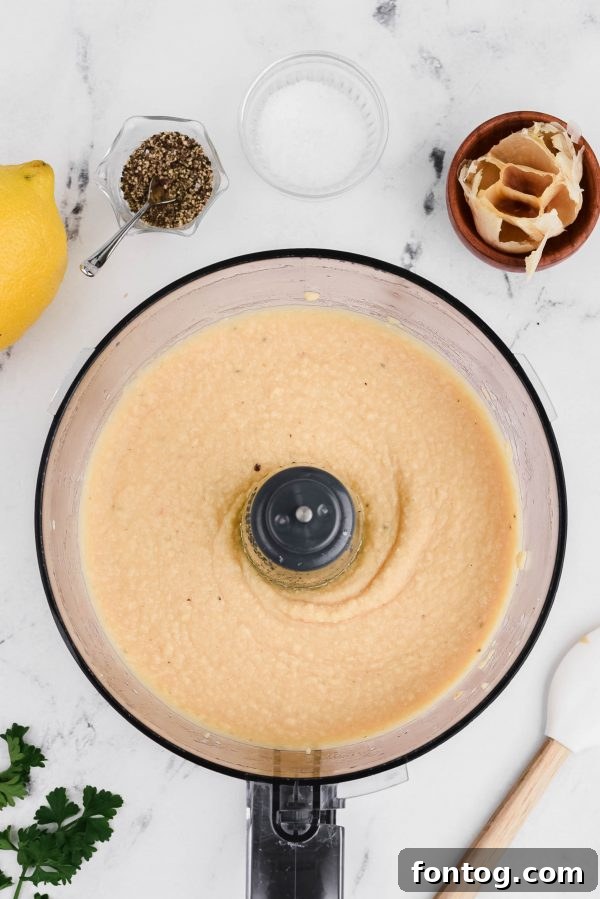
A good food processor is key to achieving that perfectly smooth hummus. For blending chickpeas and creating a truly creamy dip, a powerful food processor or high-speed blender is essential. Consider models known for their robust motors and sharp blades, as these will yield the best results. For instance, a reliable Ninja Food Processor can effortlessly transform humble chickpeas into a velvety spread.
Customizing Your Hummus Flavor
While the roasted garlic is the star, hummus is highly adaptable. If you enjoy a brighter, more tangy flavor profile, a bit of extra lemon juice will do the trick. For those who love a hint of spice and color, consider adding a couple of roasted red peppers to your blend to create a delightful roasted red pepper hummus. Other popular additions include a pinch of smoked paprika, a dash of cumin for an earthy kick, or fresh herbs like parsley or cilantro for a vibrant finish. Don’t be afraid to experiment and find your favorite combination!
Serving Suggestions for Roasted Garlic Hummus
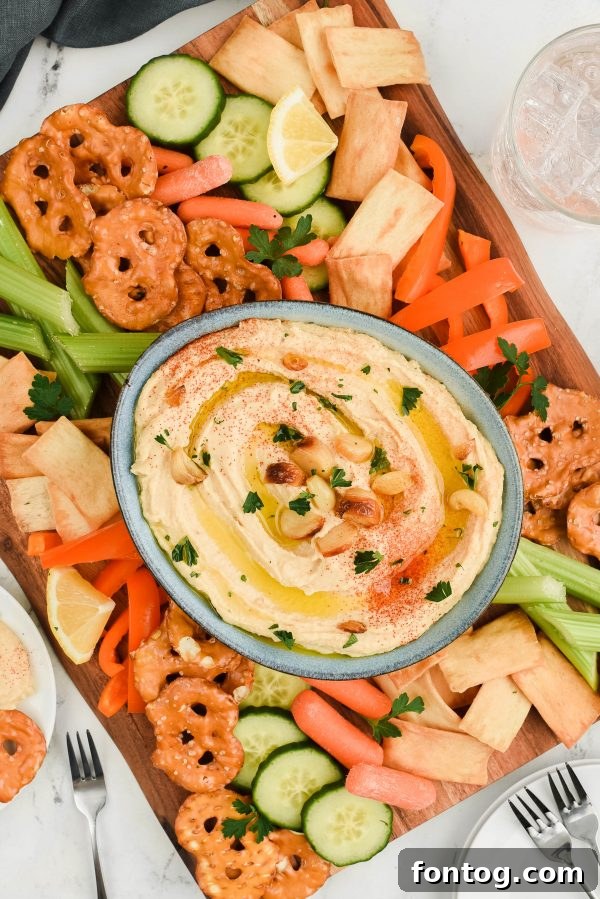
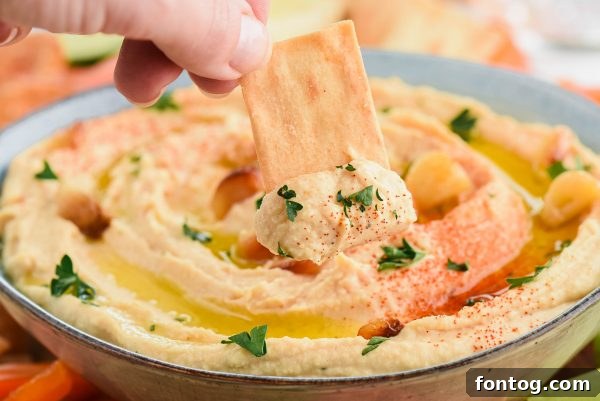
Roasted Garlic Hummus is incredibly versatile and can be enjoyed in a multitude of ways, making it much more than just a dip. Here are some ideas to inspire your culinary creativity:
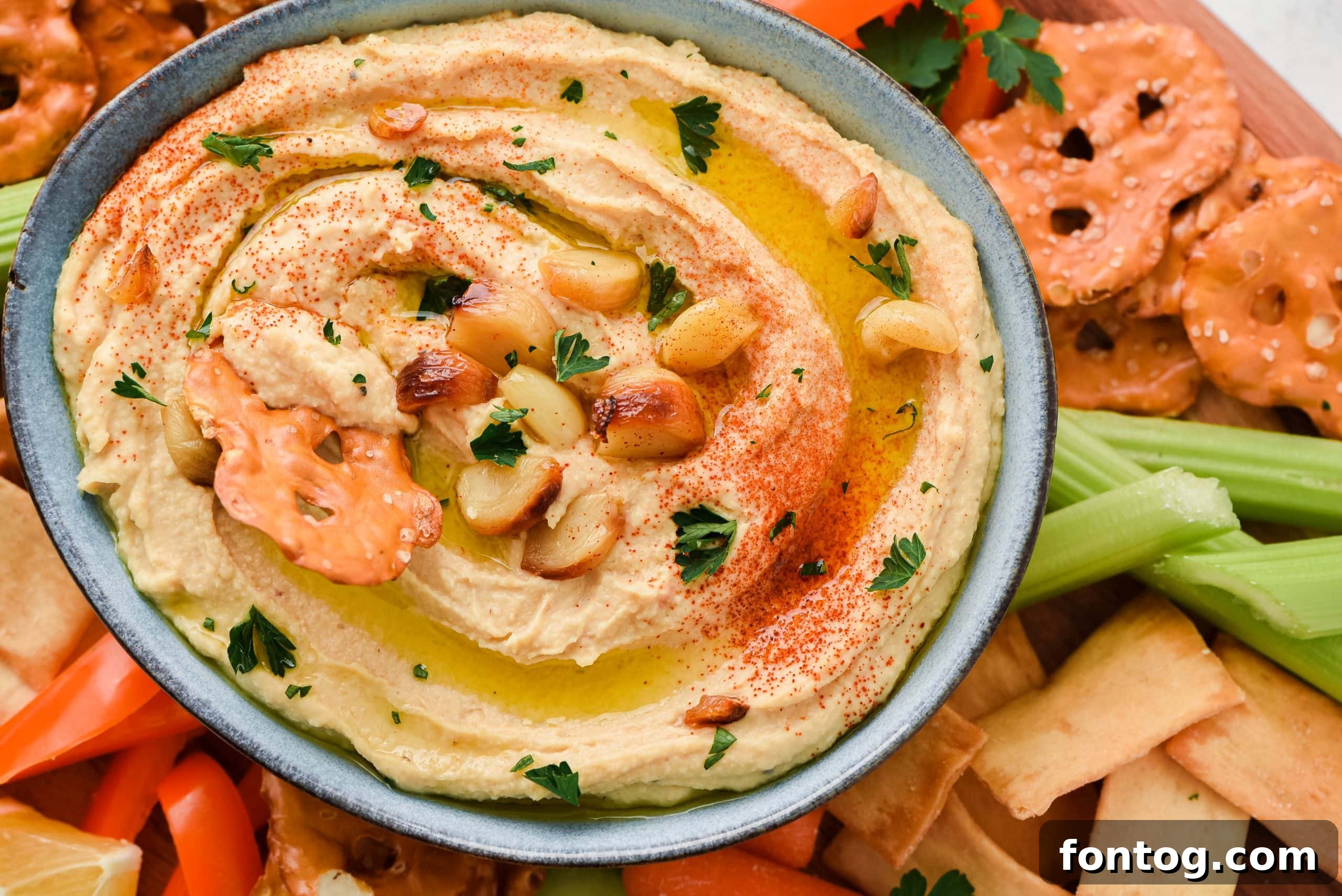
- Classic Dippers: Serve with a vibrant assortment of fresh vegetable sticks such as crisp cucumbers, crunchy carrot sticks, tender celery, vibrant bell pepper strips, cherry tomatoes, and broccoli florets. Warm pita bread, crispy pita chips, and a variety of gluten-free crackers, bagel chips, or pretzels are also perfect companions.
- Elevate Your Meals: Spread it generously on sandwiches, wraps, or bagels for a healthy and flavorful boost. Use it as a creamy base for grain bowls, adding a layer of rich flavor beneath your chosen grains, proteins, and veggies. Dollop it onto fresh salads instead of traditional dressings for an added protein punch and a creamy texture.
- Creative Culinary Uses: Thin the hummus slightly with a bit of water or lemon juice to create a creamy salad dressing or a sauce for grilled chicken or fish. It can also act as a fantastic binder and flavor enhancer in homemade veggie burgers or falafel. Don’t limit its potential; it’s a wonderful alternative to mayonnaise or other spreads.

With its rich flavor and wholesome ingredients, roasted garlic hummus is ready to be the star of your next snack session or meal. Enjoy this delicious, easy-to-make, and naturally gluten-free delight!
Easy Roasted Garlic Hummus Recipe
Roasted Garlic Hummus
Created by: Kristy Still
This roasted garlic hummus recipe is a healthy, quick snack or an impressive last-minute appetizer. Its creamy texture and deep flavor make it perfect as a dip for pita chips, bagel chips, pretzel crisps, or an array of fresh vegetables. You can also generously top sandwiches, salads, wraps, and bagels with it for an added burst of flavor and nutrition.
Course: Appetizer
Cuisine: American
Servings: 12
Prep Time: 5 minutes
Ingredients
- 15 Oz Canned Chickpeas, Drained and Rinsed
- 2 Tbsp Water
- 1/3 Cup Prepared Tahini
- 3 Tbsp Olive Oil
- 1/2 Lemon (Juiced)
- 2 Heads Roasted Garlic
- 1 Tsp Salt
- 1/2 Tsp Black Pepper
Instructions
Roasting the Garlic
- Preheat your oven to 400°F (200°C).
- Carefully cut approximately 1/2 inch off the top of two garlic bulbs to expose the cloves.
- Place both garlic bulbs and the cut-off tops onto a piece of aluminum foil. Drizzle generously with canola or olive oil.
- Bring the sides of the aluminum foil up and seal them tightly to form a packet, ensuring no steam escapes.
- Place the foil packet on a baking sheet and bake in the preheated oven for 45 minutes, or until the garlic cloves are golden brown, exceptionally soft, and wonderfully fragrant.
- Once cooled slightly, remove the roasted garlic cloves from their skins. This can be done by gently squeezing the bulb upside down or by using a small paring knife to ease them out.
To Make the Hummus
- Place the drained and rinsed chickpeas in a microwave-safe bowl with 2 tablespoons of water.
- Cover the bowl with a wet paper towel and microwave for 1 minute and 30 seconds. This step helps soften the chickpeas for a smoother texture.
- Combine all the hummus ingredients – the warmed chickpeas, roasted garlic cloves, prepared tahini, olive oil, fresh lemon juice, salt, and black pepper – into the work bowl of a food processor or a high-speed blender. Process for 1 minute.
- Stop the processor, scrape down any ingredients clinging to the sides of the bowl, and then process for an additional 1 minute to achieve optimal smoothness.
- If the hummus consistency is too thick for your preference, add water one teaspoon at a time while continuing to process until the desired consistency is reached. Remember that hummus will thicken slightly as it chills; it should slowly flow off a spoon.
- Taste the hummus and adjust the seasoning as needed, adding more salt and pepper to suit your palate.
- For best flavor and texture, chill the roasted garlic hummus in the refrigerator for at least 30 minutes before serving. Serve cold.
- Store any leftover hummus in an airtight container in the refrigerator for up to 5 days.
Notes
- Chickpeas vs. Garbanzo Beans: These are two names for the same legume and can be used interchangeably in this recipe.
- Gluten-Free Tahini: Always remember to check the ingredients label of your tahini sauce to verify it’s gluten-free, especially if you have specific dietary restrictions.
- Homemade Tahini: If you’re unable to find tahini at your local grocery store, you can easily prepare your own: Add 1 cup of toasted hulled sesame seeds (often available in large jars in the international aisle) to a food processor or high-speed blender. Pulse until the seeds are finely ground. Then, drizzle in 2 tablespoons of canola oil (or another neutral-flavored oil) and process for another 3 minutes until the mixture is smooth and runny. If it’s still too thick, incorporate one more tablespoon of oil and process again until thoroughly combined. Store your homemade tahini in an airtight container in the refrigerator.
Nutrition Information (per serving)
- Serving Size: 12g
- Calories: 137kcal
- Carbohydrates: 13g
- Protein: 5g
- Fat: 8g
- Saturated Fat: 1g
- Polyunsaturated Fat: 2g
- Monounsaturated Fat: 4g
- Sodium: 200mg
- Potassium: 160mg
- Fiber: 3g
- Sugar: 2g
- Vitamin A: 16IU
- Vitamin C: 5mg
- Calcium: 37mg
- Iron: 1mg
Frequently Asked Questions About Hummus
Is hummus really gluten-free?
Yes, traditional hummus made from its core ingredients—chickpeas, tahini, olive oil, lemon juice, and garlic—is naturally gluten-free. This makes it an excellent choice for individuals with celiac disease or gluten sensitivity. However, when purchasing pre-made hummus or tahini, it’s always wise to check the product labels for certifications or any potential cross-contamination warnings, especially in facilities that process gluten-containing grains. Making hummus at home provides complete control over the ingredients, ensuring it meets your dietary needs.
Can I make hummus without tahini?
While tahini is a hallmark ingredient that imparts hummus with its characteristic creamy texture and distinctive nutty depth, it is possible to make a version without it. If you’re out of tahini or have an allergy, you can try substitutes like cashew butter or almond butter, though these will alter the flavor profile significantly. Alternatively, you can omit it and adjust the texture with a bit more olive oil and water. However, for that authentic, rich hummus taste and velvety mouthfeel, tahini is highly recommended and truly irreplaceable.
How do I make my hummus extra smooth?
Achieving an ultra-smooth hummus is the goal for many, and several tricks can help you get there:
- Peel the Chickpeas: For the absolute creamiest hummus, painstakingly peeling the thin skins off each cooked chickpea is the ultimate secret. While time-consuming, it yields an unparalleled silky texture.
- Warm Chickpeas: As recommended in our recipe, warming the chickpeas slightly before blending helps them break down more easily and fully, contributing to a smoother consistency.
- Add Ice Water: Incorporating a few tablespoons of ice-cold water during the blending process can remarkably lighten and aerate the hummus, making it fluffier and smoother.
- Blend Longer: Don’t underestimate the power of your food processor. Allow it to run for several minutes, stopping occasionally to scrape down the sides, to ensure all ingredients are thoroughly pulverized and emulsified.
What are the best chickpeas to use?
For convenience and consistent results, canned chickpeas are an excellent choice for this recipe. Always ensure they are well-drained and thoroughly rinsed under cold water before use to remove excess sodium and any residual canning liquid. If you have more time and prefer to cook from scratch, using dried chickpeas is also an option. Soak them overnight and then boil them until they are very tender, which might take longer but can yield an even fresher flavor and texture.
How long does homemade hummus last?
When stored properly in an airtight container in the refrigerator, homemade roasted garlic hummus typically maintains its freshness and quality for about 5 to 7 days. To further extend its shelf life, you can drizzle a thin layer of olive oil over the surface before sealing the container, which helps to prevent drying and oxidation. Always trust your senses; if the hummus develops an off smell, changes color significantly, or shows any signs of mold, it’s best to discard it.
Conclusion: Enjoy Your Homemade Delight!
Crafting your own Roasted Garlic Hummus is a rewarding experience, transforming simple ingredients into a gourmet, healthful dip that’s far superior to any store-bought version. This recipe, designed for ease and packed with incredible flavor, makes it accessible whether you’re a seasoned chef or just starting your culinary journey. It’s more than just a snack; it’s a versatile culinary staple that elevates any meal, offering a creamy, aromatic, and satisfying addition to your table. Dive in and savor the rich, wholesome taste of homemade perfection!
Did you make this recipe?
We’d love to see your delicious creations! Share your Roasted Garlic Hummus on Instagram and tag #mommyhatescooking. Don’t forget to follow us for more easy and delightful recipes: @momhatescooking.