Mastering Smoked Beef Brisket on a Pellet Grill: Your Ultimate Guide to a Legendary Cookout
There’s nothing quite like the savory aroma and melt-in-your-mouth texture of perfectly smoked beef brisket. It’s a true barbecue masterpiece that commands attention and patience, but the rewards are absolutely phenomenal. While the thought of smoking a whole brisket might seem daunting, especially for beginners, a pellet grill simplifies the process, making it accessible to anyone aspiring to create the best brisket in the neighborhood. This comprehensive guide will walk you through every step, ensuring your next cookout features a succulent, flavorful smoked brisket that will impress even the most seasoned pitmasters.
The Art of Smoking Brisket on a Pellet Grill
Smoking brisket on a pellet grill combines the authentic smoky flavor of traditional smoking with the convenience and precision of modern technology. Unlike charcoal or offset smokers that require constant attention to maintain temperature, a pellet grill uses an electronic controller to feed wood pellets into a burn pot, ensuring consistent temperature and smoke production throughout the long cooking process. This ‘set-it-and-forget-it’ capability makes it an ideal tool for achieving that perfectly cooked brisket without the stress.
Choosing and Preparing Your Brisket
The journey to an incredible smoked brisket begins long before it ever touches the grill. Selecting the right cut and preparing it properly are foundational steps for success.
- **Selecting Your Brisket:** Head to your local grocery store or a reputable butcher shop to pick out your beef brisket. Look for a “packer” brisket, which includes both the “flat” (leaner muscle) and the “point” (fattier muscle). For optimal results, choose a brisket that is flexible and has a good amount of marbling (streaks of fat within the lean muscle). This intramuscular fat is key to a moist and flavorful brisket.
- **Trimming the Brisket:** Most briskets come with an untrimmed fat cap. While some fat is essential for moisture, too much can prevent the smoke and seasoning from penetrating the meat. Aim to trim the fat cap down to about 1/4 to 1/2 inch thick across the entire surface. You’ll also want to remove any hard, silver skin or excessively thick fat pockets that won’t render down during cooking. A sharp boning knife makes this process much easier. Don’t be afraid to take your time and be thorough – proper trimming greatly impacts the final product.
Seasoning for Perfection: Crafting Your Dry Rub
Once your brisket is expertly trimmed, it’s time to infuse it with flavor through a dry rub. While personal preference plays a huge role here, a good brisket rub typically balances salty, sweet, and savory elements. A simple yet effective base rub often includes:
- **Kosher Salt:** Essential for enhancing flavor and drawing out moisture to form a crust.
- **Black Pepper (coarsely ground):** Adds a pungent, aromatic bite and forms a key component of the “bark.”
- **Garlic Powder & Onion Powder:** Provide savory depth.
For a more complex flavor profile, consider adding brown sugar for a touch of sweetness and caramelization, paprika for color and mild flavor, chili powder for a hint of spice, or even a specialized beef rub like Head Country Seasoning, as we frequently use. Liberally apply your chosen rub to all surfaces of the brisket, gently pressing it into the meat to ensure it adheres well. For best results, allow the seasoned brisket to rest in the refrigerator for at least 12-24 hours. This allows the seasoning to deeply penetrate the meat, enhancing both flavor and moisture retention.
The Low & Slow Method: Smoking Your Brisket
Smoking brisket is a marathon, not a sprint. The “low and slow” cooking method is crucial for breaking down the tough connective tissues in the brisket, transforming it into tender, juicy perfection.
Setting Up Your Pellet Grill
Before placing your brisket on the grill, ensure your pellet grill is clean and filled with your chosen wood pellets. Preheat your pellet grill to a consistent temperature of 225-250°F (approximately 107-121°C). This lower temperature allows for a longer cooking time, more smoke penetration, and better rendering of the fat. Always use a reliable meat probe or digital thermometer to monitor the internal temperature of the brisket throughout the cook. Consistency in temperature is key for a evenly cooked, juicy brisket.
The Smoking Process: Phase One
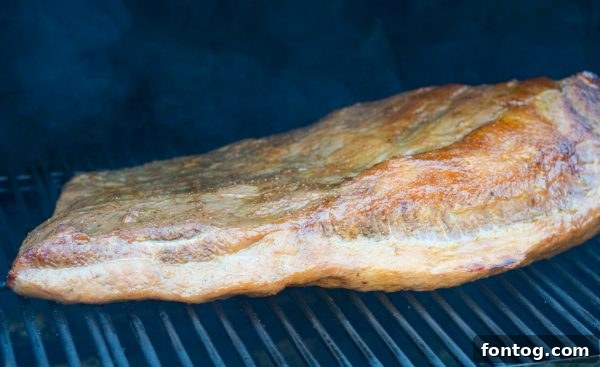
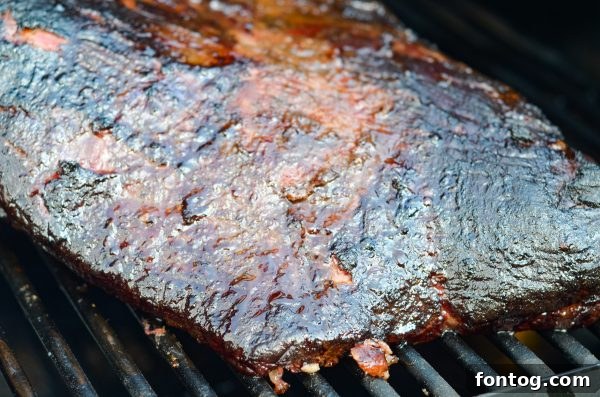
Place the brisket directly onto the grill grates, typically fat side down. This helps protect the lean meat from drying out and allows the rendered fat to baste the meat. For a 10-15 pound brisket, the initial smoking phase can last anywhere from 6 to 8 hours, or until the internal temperature reaches approximately 165-175°F (74-79°C). This is often referred to as “the stall,” where the internal temperature of the meat plateaus due to evaporative cooling. Don’t be alarmed; this is a normal part of the process.
Wrapping the Brisket: Phase Two
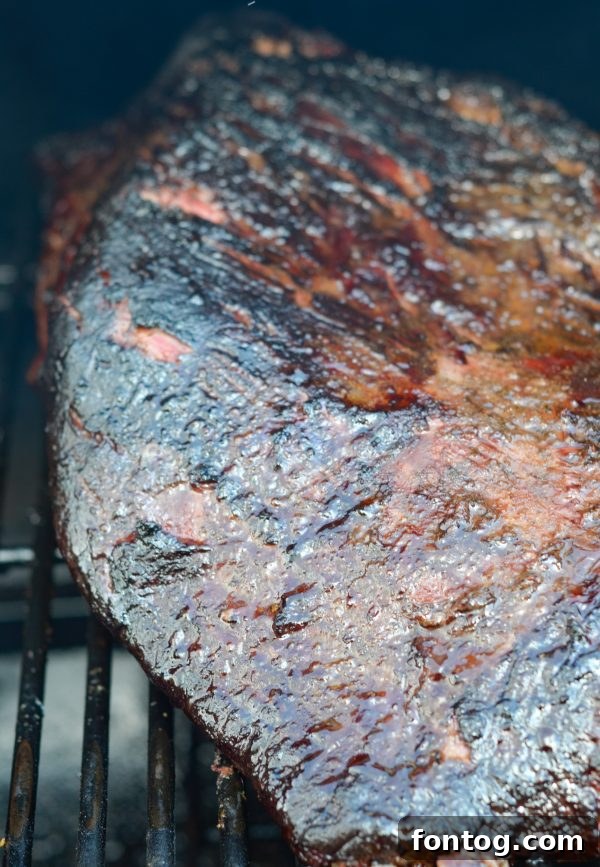
Once the brisket reaches the stall (around 165-175°F), carefully remove it from the grill. This is the optimal time to wrap it. Wrapping in aluminum foil or peach butcher paper helps push the brisket through the stall, tenderizes the meat by trapping moisture, and prevents it from drying out. Butcher paper is often preferred by many pitmasters as it still allows some moisture to escape, preserving more of the bark, while aluminum foil creates a more steamy environment. Place the wrapped brisket back on the pellet grill and continue cooking until the internal temperature reaches 200-205°F (93-96°C). For a 10-pound brisket, the total cooking time can typically range from 10 to 12 hours, but always rely on the internal temperature rather than time alone.
The Critical Rest: Don’t Skip This Step!
Once your brisket reaches its target internal temperature, remove it from the grill immediately. However, resist the urge to slice into it right away. The resting period is arguably the most crucial step for a tender and juicy brisket. Loosely tent the wrapped brisket (or keep it tightly wrapped if using foil) and let it rest at room temperature for at least 1-2 hours, or even longer (up to 4 hours in an insulated cooler). During this time, the internal temperature will continue to rise slightly (carryover cooking), and the muscle fibers will relax, allowing the juices to redistribute evenly throughout the meat. Cutting into the brisket too soon will cause all those precious juices to run out, resulting in a dry and tough outcome.
Choosing the Right Wood Pellets for Beef Brisket
The type of wood pellets you use will significantly impact the smoke flavor of your brisket. Matching the wood flavor to the meat is an important part of crafting an unforgettable barbecue experience.
- **Hickory:** A classic choice for beef, hickory offers a strong, savory smoke flavor that pairs beautifully with brisket. It’s a robust flavor that stands up well to the richness of the meat.
- **Oak:** Another popular choice for brisket, oak provides a medium-strong smoke flavor that is slightly milder than hickory but still very distinct. It’s a great all-around wood that complements beef without overpowering it.
- **Mesquite:** Known for its bold, intense flavor, mesquite is perfect if you want a very smoky, Southwestern profile. Use it sparingly or in blends if you prefer a less aggressive smoke.
- **Pecan:** Offering a sweeter, nutty, and milder smoke than hickory or oak, pecan is an excellent choice for a more nuanced flavor. It’s often used in blends to add complexity.
- **Apple or Cherry:** For those who enjoy a sweeter, fruitier smoke, apple or cherry wood pellets can add a delightful dimension to brisket. These are often best used in blends with a harder wood like hickory or oak to provide a balanced sweet and savory profile.
Experiment with different types or blends of pellets to discover your favorite smoke profile. A “competition blend” often provides a balanced flavor from various hardwoods.
Serving Your Smoked Brisket: Sliced or Chopped?
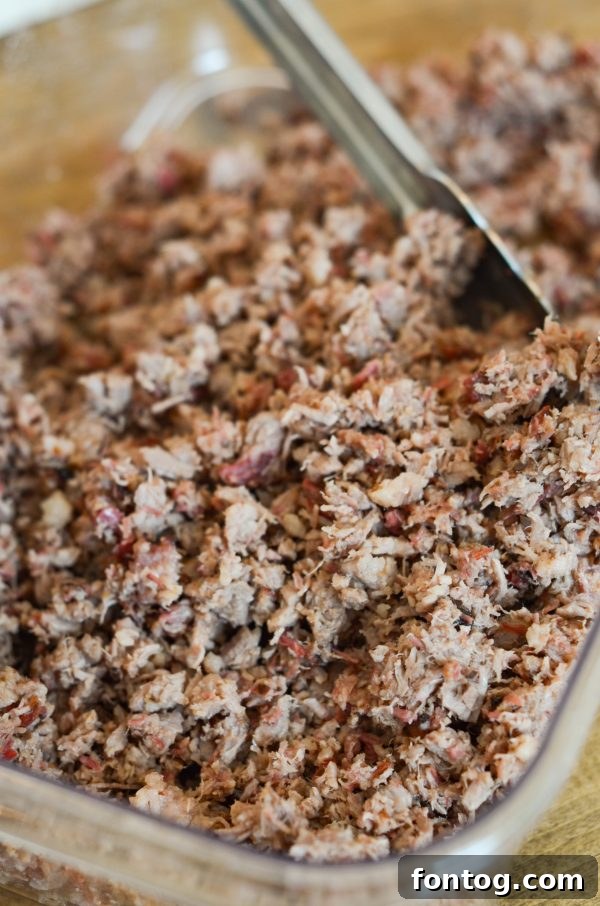
Once rested, your magnificent smoked brisket is ready for its grand reveal. The way you serve it is a matter of personal preference, but both sliced and chopped brisket offer distinct culinary experiences.
- **Sliced Brisket:** For many, the sight of beautifully sliced brisket with its distinct smoke ring and glistening juices is the epitome of barbecue. Always slice against the grain of the meat. The flat and the point of a packer brisket have grains that run in different directions, so it’s often easiest to separate them before slicing. The flat is typically sliced into thin, uniform pieces, perfect for platters.
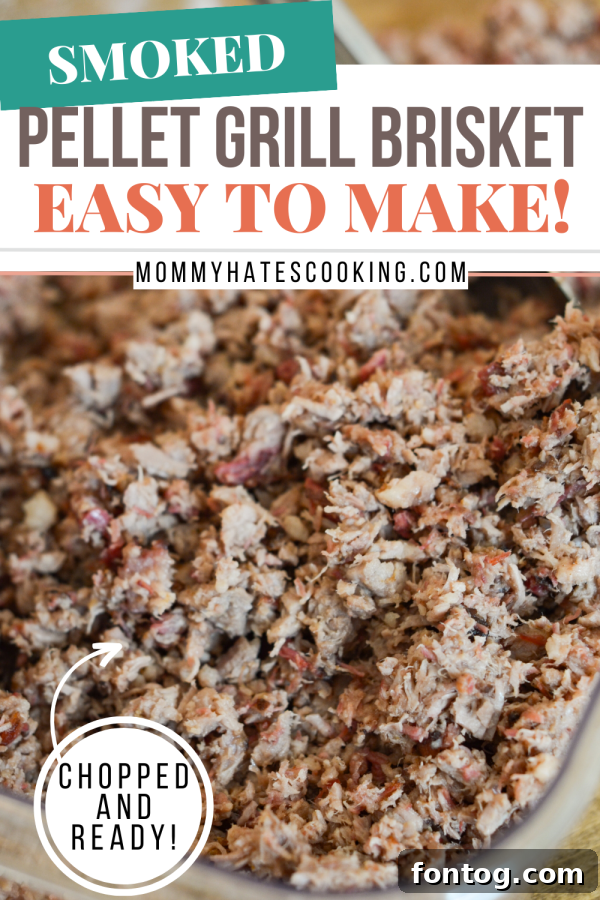
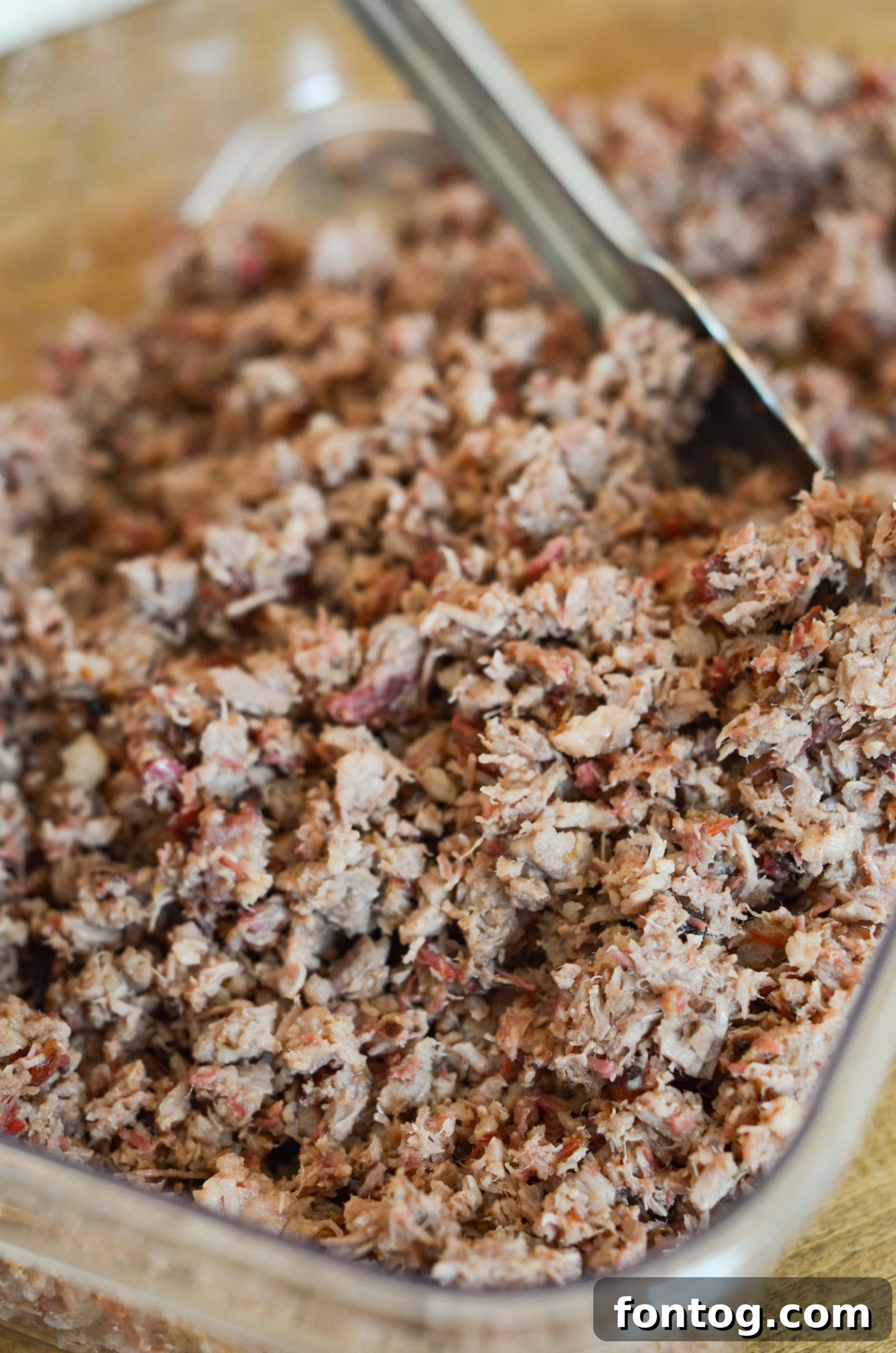
- **Chopped Brisket:** In our family, chopped brisket is a beloved favorite. It’s incredibly versatile, easy to eat, and absolutely delicious on a sandwich or mixed into other dishes. You can chop it by hand with a very sharp knife on a sturdy cutting board, or for a quicker method, place smaller chunks into a food processor and pulse until you reach your desired consistency.
Serve your brisket plain to savor the pure smoky flavor, or with a side of your favorite homemade barbecue sauce. It’s fantastic on its own, piled high on a sandwich, or even topping a baked potato.
Expand Your Smoking Repertoire!
Mastering smoked beef brisket is a significant achievement, but the world of pellet grill smoking is vast and delicious. Once you’ve perfected your brisket, consider exploring these other fantastic smoked meat recipes:
- Smoked Burnt Ends
- Smoked Turkey Legs
- Smoked Chicken Quarters
- Smoked Bologna
Each smoked meat offers a unique challenge and a delightful reward. Remember, while there are many methods for smoking brisket, this guide presents our preferred approach, honed over years of delicious cookouts. Enjoy the process, savor the flavors, and become the barbecue hero of your neighborhood!
For more incredible ideas, check out our list of 35 Best Pellet Grill Recipes!
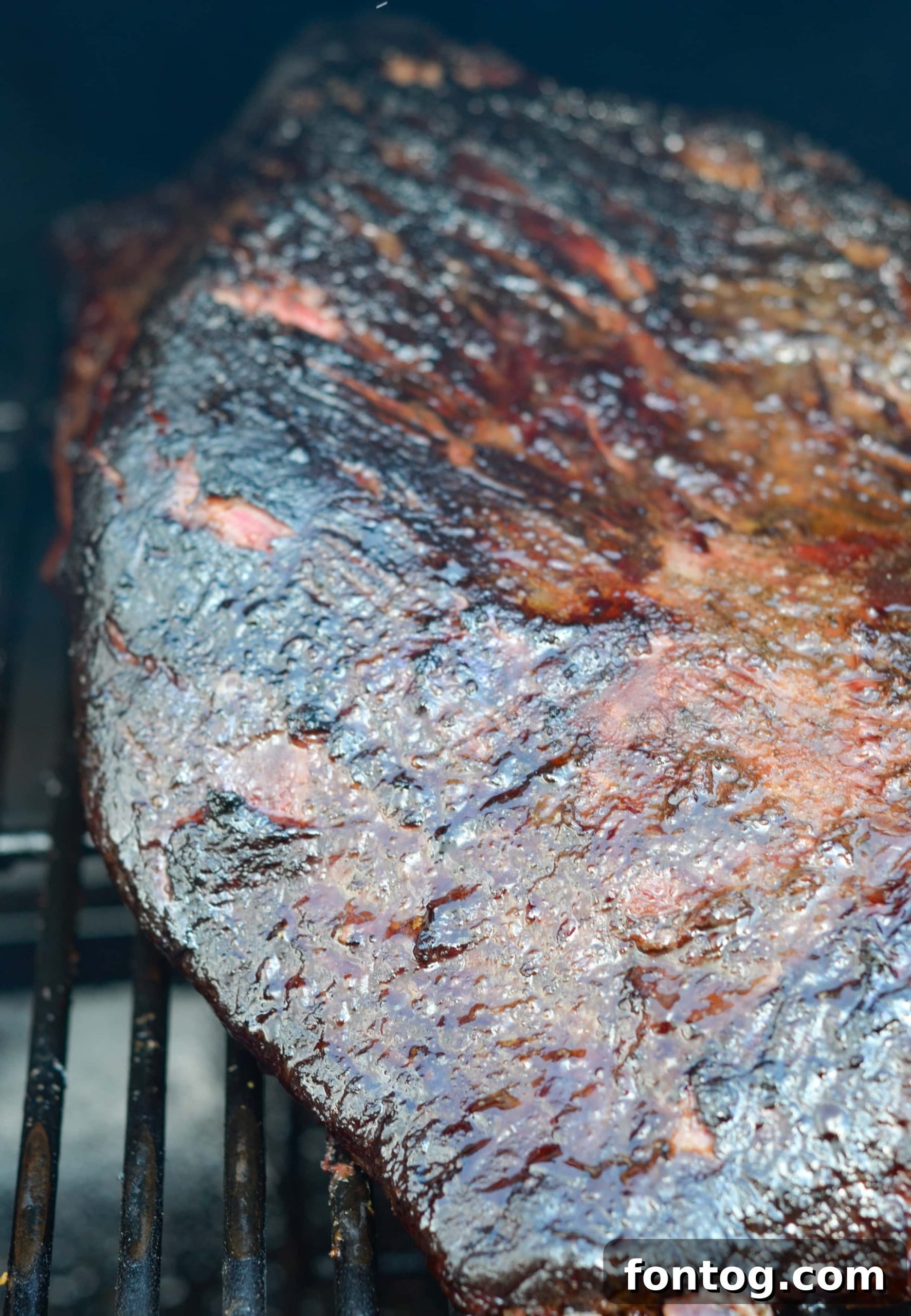
Smoked Brisket
📌Pin Recipe
Ingredients
- 10 Pound Beef Brisket
- 4 Tbsp Brown Sugar
- 4 Tbsp Head Country Seasoning
- Aluminum Foil or Butcher Paper
- Barbecue Sauce
Instructions
- Once the brisket is trimmed (including the fat cap to about 1/4 inch thick), season it with Head Country seasoning and brown sugar on all sides. It’s best to use a sheet pan that has sides to hold it in.
- Place the seasoned brisket on the sheet pan and let it rest in the fridge for 24 hours.
- Warm up the pellet grill to 250°F (121°C).
- Place the brisket fat side down directly on the grill grates and cook until the internal temperature reaches 170°F (77°C). This can take anywhere from 6-8 hours depending on the size of the brisket.
- After it has reached 170°F, carefully remove and wrap the brisket in aluminum foil or butcher paper. Place it back on the pellet grill for an additional 3-4 hours until the internal temperature reaches near 205°F (96°C).
- This entire process will take about 10-12 hours for a 10-pound brisket.
- Once fully cooked, remove and let the brisket rest for at least 1 full hour.
- Slice or Chop and Serve with barbecue sauce.
Notes
Be sure to follow the instructions of your specific smoker when it comes to setup and adding the wood chips etc.
The cooking time will also vary depending on outdoor temperature as well as the size of the brisket, so be sure to use a meat thermometer to ensure that it’s fully cooked internally. It is typically based on 1-1 1/2 hours per 1 pound of meat.
Nutrition
Did you make this recipe?
Make sure to tag #mommyhatescooking on Instagram and follow for more @momhatescooking
Pin Recipe
Share on Facebook