Photo Source: Traditional Home
Transform Your Kitchen: The Ultimate Guide to Pantry Organization
Stepping into a well-organized pantry is like a breath of fresh air. It’s a space where every item has its home, where ingredients are easy to find, and where meal preparation feels less like a chore and more like a joy. For many, the pantry can quickly become a chaotic jumble of forgotten foods, duplicate purchases, and expired goods. This common household challenge is precisely why dedicating time to pantry organization is one of the most rewarding home projects you can undertake.
Today, we’re diving deep into the art of pantry reorganization, taking inspiration from the visually stunning, highly efficient pantries we often admire online. My goal, much like many of you, is to transform a sometimes overwhelming space into a functional, beautiful, and sustainable area that supports our culinary adventures and reduces daily stress. Join me on this journey as we explore practical tips, tackle common hurdles, and unveil the secrets to a pantry that works for you, not against you.
Why a Well-Organized Pantry Matters More Than You Think
Beyond the aesthetic appeal, an organized pantry offers a multitude of tangible benefits that impact your daily life and your household budget. It’s more than just tidiness; it’s about efficiency, savings, and peace of mind.
- Saves Time and Effort: Imagine opening your pantry door and instantly spotting the exact ingredient you need. No more rummaging through cluttered shelves, pulling out multiple items, or frantically searching for that elusive can of diced tomatoes. An organized system means fewer minutes wasted, allowing you more time for cooking, family, or simply relaxing.
- Reduces Food Waste: When items are visible and accessible, they’re more likely to be used before they expire. Forgotten foods lurking in the back of your pantry contribute significantly to food waste, which in turn wastes money. An organized pantry encourages a “first in, first out” (FIFO) approach, ensuring older items are used before newer ones.
- Saves Money: By knowing exactly what you have on hand, you can avoid buying duplicates. How many times have you purchased another bag of flour or box of pasta, only to discover you already had two tucked away? An inventory of your pantry essentials means smarter grocery shopping and a noticeable reduction in your weekly food bill.
- Promotes Healthier Eating: When healthy snacks and meal components are easily visible and accessible, you’re more likely to reach for them. A well-stocked and organized pantry encourages home cooking and makes it easier to prepare nutritious meals for your family, shifting away from less healthy convenience options.
- Reduces Stress: A cluttered environment can contribute to feelings of overwhelm. A calm, orderly pantry, by contrast, can bring a sense of tranquility to your kitchen. It simplifies meal planning and preparation, making the entire cooking experience more enjoyable and less stressful.
Drawing Inspiration from the Best: Pinterest Pantry Dreams and Realities
The internet, particularly platforms like Pinterest, is brimming with images of impeccably organized pantries. These aspirational spaces often feature uniform clear containers, perfectly labeled bins, artfully arranged shelves, and a sense of serene order. This very idea, of having food neatly tucked away in baskets and designated containers, sparked my own desire to tackle my pantry. It’s a concept I’ve seen successfully implemented, not just in professional designs but also in practical home solutions, like the dinner baskets idea shared by Unorganized Mommy, which helps streamline meal prep.
While these Pinterest-perfect pantries offer fantastic inspiration, it’s crucial to acknowledge the gap between aspiration and everyday reality. Not everyone has a spacious walk-in pantry, nor do we all have the budget to invest in a full suite of matching, high-end organizational tools. The key is to take the core principles of these inspiring designs – categorization, containment, and labeling – and adapt them to fit your specific space, needs, and budget. My pantry, for example, is far from the expansive walk-in type seen in many of these photos, but the underlying principles of smart storage can still be applied effectively.
It’s also important to remember that real-life pantries are dynamic spaces, especially in a bustling household. The beautiful pantry image at the top of this article, with its orderly baskets and pristine shelves, served as a catalyst for my recent organizing spree. While I admire its flawless execution, I can’t help but notice what appear to be apples on the floor – a small detail that makes me chuckle and hope they’re artificial, lest they invite unwelcome guests! This highlights that even in seemingly perfect spaces, there are always practical considerations. My initial step was to gather a few old bins I had repurposed from another room, ready to begin my own transformation, proving that you don’t always need new supplies to start.
My Personal Pantry Organization Journey: Before the Transformation
My pantry’s layout, while not a walk-in, features shelves similar to the inspirational photos, offering a good base for organization. One idea I particularly love is having cookbooks readily accessible on kitchen shelves. Currently, with our kitchen’s existing setup, they just don’t fit. However, we’re on the cusp of a much-anticipated kitchen remodel and redecorating project. This exciting endeavor will involve a complete reorganization of our cabinets, and I’m eagerly planning to carve out a dedicated, easily accessible spot for all my cookbooks – crucially, one that is safely out of my toddler’s reach!
Now, for the honest reality of my pantry: I can spend a significant amount of time organizing it, only to find it in disarray the very next day. And no, it’s not my doing. The culprit? Tiny, determined fingers. My son, with his boundless curiosity and love for “helping,” enjoys nothing more than embarking on his own reorganization projects. If an interesting item is out of reach on a higher shelf, he’ll resourcefully locate his toy buckets or a chair, ensuring he can access and “redesign” the pantry to his liking. This dynamic adds a unique layer of challenge to maintaining order, but also a dash of humor to our daily lives.
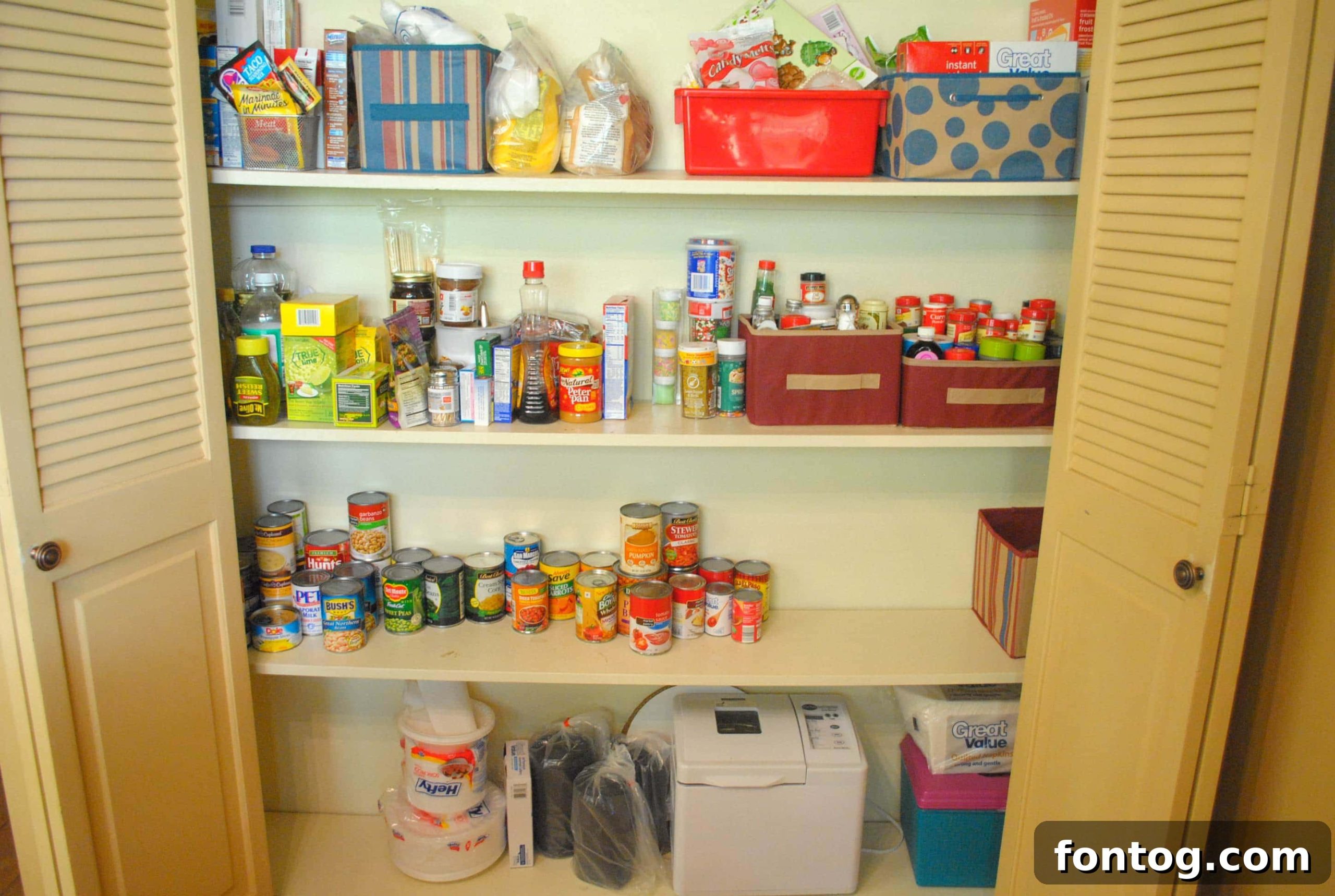
This is the “before” picture of my pantry, a testament to everyday family life:
Looking at this image, it’s clear I had just attempted to arrange the canned goods. Normally, this section is my son’s absolute favorite area to explore, play with, and yes, thoroughly reorganize. The cans become building blocks, and the labels are a mystery waiting to be unraveled, often leading to a cascade of metal cylinders across the pantry floor. It’s a constant battle between my desire for order and his innate drive for exploration!
The Step-by-Step Guide to a More Organized Pantry
Transforming your pantry doesn’t require a complete overhaul or a massive budget. It starts with a strategic approach and a few dedicated hours. Here’s a practical, step-by-step guide to help you achieve a more functional and beautiful pantry:
Step 1: Empty and Evaluate Everything
The most crucial first step is to completely empty your pantry. Take everything out – every can, box, bag, and container. As you do this, check expiration dates meticulously. Discard anything that’s expired, stale, or no longer safe to consume. Donate non-perishable, unexpired items you no longer want or need to a local food bank. This decluttering phase is critical for starting with a clean slate.
Once everything is out, give your shelves a thorough cleaning. Wipe down dust, crumbs, and any spills. A clean foundation is essential for a truly organized space.
Step 2: Sort and Categorize
With your items laid out, begin sorting them into logical categories. Think about how you use your pantry. Common categories include:
- Baking Supplies: Flour, sugar, baking soda, chocolate chips, spices.
- Canned Goods: Vegetables, fruits, beans, soups.
- Pasta and Grains: Various pastas, rice, quinoa, lentils.
- Snacks: Chips, crackers, granola bars, nuts.
- Breakfast Items: Cereal, oatmeal, pancake mix.
- Condiments/Sauces: Ketchup, mustard, soy sauce, oils, vinegars.
- Spices and Herbs: (If not stored elsewhere).
You might also consider creating “meal baskets” like the idea from Unorganized Mommy, where all the ingredients for a specific meal (e.g., “Taco Night,” “Pasta Dinner”) are grouped together. This can be a huge time-saver for busy weeknights.
Step 3: Choose Your Storage Solutions Wisely
Now that you know what you have and how it’s categorized, it’s time to select appropriate storage solutions. You don’t need to buy everything new; start with what you have!
- Bins and Baskets: Excellent for corralling smaller items, snacks, or grouping categories. They prevent items from spreading and make it easy to pull out a whole category at once. Look for sturdy plastic, wire, or woven baskets.
- Clear Containers: Ideal for dry goods like flour, sugar, pasta, rice, and cereals. They allow you to see contents at a glance, protect against pests, and create a uniform, aesthetically pleasing look.
- Shelf Risers/Expanders: Maximize vertical space, especially in tall cabinets, allowing you to stack items efficiently without obscuring what’s behind them.
- Lazy Susans (Turntables): Perfect for corner cabinets or deep shelves, making spices, oils, or small jars easily accessible with a simple spin.
- Door Organizers: Utilize the often-underused space on the back of your pantry door for spices, small packets, or even rolls of foil and plastic wrap.
Step 4: Implement and Arrange Strategically
Begin placing your categorized and contained items back into the pantry, following these guidelines:
- Eye Level for Frequently Used: Place items you use most often at eye level for easy access.
- Lower Shelves for Heavy/Bulky Items: Canned goods (in organized bins!), large bags of pet food, or extra paper towels can go on lower, sturdier shelves.
- Higher Shelves for Less Used: Reserve the top shelves for overflow, seasonal items, or specialty ingredients you don’t reach for daily.
- Child-Proofing (if applicable): If you have little ones, consider dedicating lower shelves to child-safe snacks or items they can access without causing havoc, or secure shelves with child locks. My personal challenge with my toddler means I’m always strategizing how to keep certain items out of his inquisitive reach!
Step 5: Label Everything!
This step is non-negotiable for long-term organization. Labels ensure that everyone in the household knows where things belong. They also help you maintain the system when restocking. Use a label maker, chalkboard labels, or even simple masking tape and a marker. Be specific (e.g., “Pasta – Penne,” “Baking Flours”) but also general enough for categories (“Snacks,” “Canned Veggies”).
My Pantry’s “After”: Progress, Not Perfection
After applying these steps, the transformation in my pantry, while not magazine-ready, is a significant improvement. It’s a work in progress, but it’s undoubtedly “getting there.”
As you can see from the “after” picture, it’s certainly not as aesthetically perfect as the initial inspiration photo. I still need to invest in more uniform boxes and baskets to truly contain everything. And yes, my canned goods had already been “rearranged” by my little helper once again! However, the overall structure is much better. There are clearer zones, and the general clutter has been significantly reduced. Coming from a previous home that had no pantry at all, I can honestly say I’m simply overjoyed to have a dedicated pantry space to organize, even if it requires ongoing maintenance.
Future Plans: Kitchen Remodel and the Perfect Cookbook Corner
The current state of my pantry is just a stepping stone. As mentioned, we’re about to embark on an exciting kitchen remodel and redecorating project. This will be a golden opportunity to fully optimize our kitchen storage, including the pantry. My vision for this remodel includes not only a more efficient pantry layout with built-in solutions but also a dedicated area for all my cookbooks.
Finding a spot for cookbooks that is both easily accessible for me and safely out of my toddler’s curious grasp has been a long-standing challenge. During the remodel, I hope to create a beautiful, functional display that integrates seamlessly into the kitchen design, making my recipe collection an inspiring part of the space rather than a hidden stack. This long-term project fills me with anticipation for a kitchen that is not only visually appealing but also perfectly tailored to our family’s needs and daily routines.
Maintaining Your Organized Pantry: Tips for Long-Term Success
The initial organization is a fantastic achievement, but the real challenge lies in maintaining that order. Here are some strategies for long-term pantry perfection:
- Regular Quick Tidies: Don’t wait for a full-blown mess. Spend 5-10 minutes each week doing a quick tidy-up, putting items back in their designated spots.
- Involve the Family: Teach older children (and even toddlers, in a simplified way) where items belong. Make it a family effort to put groceries away in the correct categories.
- Meal Planning and Inventory: Before grocery shopping, check your pantry. Plan meals based on what you already have, and make a list of what truly needs replenishing. This helps prevent over-purchasing and keeps your pantry lean.
- “First In, First Out” (FIFO): When putting away new groceries, place older items at the front of their categories so they are used first. This is especially important for items with expiration dates.
- One-In, One-Out Rule: When you buy a new container or organizational tool, ensure it truly serves a purpose and doesn’t just add to clutter. If something comes in, something similar or unnecessary should go out.
Embarking on a pantry organization project is a journey, not a destination. It requires ongoing attention, especially with a busy family, but the rewards are immeasurable. From saving time and money to fostering a calmer kitchen environment, a well-organized pantry truly enhances daily life. So, embrace the process, celebrate your progress, and enjoy the fruits of your labor!
Happy reorganizing!
Have you visited our Products list? Be sure and check out Mommy Hates Cooking Products and Services.
Need more recipe ideas? Check out the Recipe Index by Mommy Hates Cooking.