DIY Stair Transformation: From Dated Carpet to Elegant Stained Wood
Since the day we moved into our home, my husband and I have embarked on a continuous journey of home improvement. Our philosophy has always been to infuse our personal style and update spaces to truly make them our own. This often starts with an idea sparked in my mind, which then beautifully translates into a tangible project thanks to my husband’s incredible handy skills. While I’m the visionary, he’s the artisan who meticulously brings those visions to life, and I, of course, step in for the crucial final touches.
It was a delightful surprise after we married to discover the extent of his craftsmanship. I can simply articulate a desire – “Oh, I would love to have something like that!” – and before I know it, he’s found a way to make it happen. What truly astonishes me is his intuitive approach; he rarely needs elaborate plans or blueprints. He simply visualizes the outcome and skillfully executes every step. Considering the endless stream of ideas that flow through my mind, having such a capable partner is an absolute blessing.
The Unexpected Inspiration: Tearing Up the Carpet
Our home renovation efforts often snowball. While we were deeply engrossed in a significant project – ripping up the old carpet in our office and meticulously replacing it with durable, stylish tile – an undeniable urge took hold of me. My gaze drifted to the carpeted staircase, a prominent feature in our entryway, and a powerful thought emerged: “Why not tackle the stairs too?”
Naturally, my husband, already knee-deep in the office project, was less than enthusiastic. He foresaw the immense time commitment and the inevitable delays that adding another major undertaking would entail. His pragmatic side argued that it could take months to properly finish the stairs, given our busy schedules. But the vision of those beautiful, bare wood stairs, free from the worn, outdated carpet, was too strong to ignore. I was more than content with the idea of living with raw wood if it meant ridding our home of that “nasty carpet” sooner rather than later.
And so, fueled by determination (and a touch of stubbornness), I enlisted the help of my wonderful dad. Together, we donned our “she-woman” hats and began the arduous task of ripping up the carpet from the stairs. It was a messy, physically demanding job, but with each section we pulled away, the excitement for the potential underneath grew.
The downside? My husband’s initial reservations proved entirely accurate. What we anticipated as a quick, satisfying win turned into our longest-running project to date, stretching out over a grueling six months. We are usually efficient and complete most projects within days, but the convergence of the holiday season and various other commitments meant that finding dedicated time for the stairs became an increasingly difficult challenge.
Essential Tools and Materials for Your Staircase Makeover
Before diving into a project of this magnitude, having the right tools and materials on hand is crucial. Proper preparation not only streamlines the process but also ensures safety and a professional-looking finish. Here’s a comprehensive list of what we found indispensable for transforming our carpeted stairs into beautiful stained wood:
- For Carpet Removal:
- Utility knife (with plenty of fresh blades)
- Heavy-duty pliers or vice grips
- Pry bar or flat bar
- Gloves (heavy-duty work gloves are a must)
- Knee pads (your knees will thank you)
- Safety glasses
- Trash bags or a wheelbarrow for debris
- For Preparation & Repair:
- Floor scraper or putty knife
- Hammer
- Wood filler or wood putty
- Sanding block or orbital sander (with various grit sandpaper: 60, 80, 120, 180, 220)
- Detail sander (for corners and tight spots)
- Shop-vac or powerful vacuum cleaner
- Microfiber cloths or tack cloths
- Cleaner/degreaser (specifically for wood)
- For Staining & Finishing:
- Wood pre-conditioner
- Wood stain (oil-based or water-based, in your desired color)
- Polyurethane or polycrylic topcoat (we chose a glossy finish)
- Natural bristle brushes (for oil-based stain) or synthetic brushes (for water-based products)
- Foam brushes or staining pads
- Clean rags or old t-shirts (for wiping excess stain)
- Painter’s tape
- Drop cloths or plastic sheeting
- For Trim & Detail Work:
- Miter saw (for precise cuts on trim and beadboard)
- Nail gun (pneumatic or cordless) and finishing nails
- Caulk gun and paintable caulk
- Wood glue
- Primer (if painting trim)
- Paint (for trim, we used white)
- Small paintbrushes and painter’s tape
- Decals (optional, for decorative touches)
Having these items ready before you start will make the process smoother and more efficient, allowing you to focus on each step without constant trips to the hardware store.
The Step-by-Step DIY Stair Transformation Process
1. Conquering the Carpet and Tack “Heaven”
Once the carpet was off, we were faced with what can only be described as “tack and nail heaven.” Every inch of those treads and risers was peppered with hundreds, if not thousands, of staples, tack strips, and nails. This stage was by far the most labor-intensive and time-consuming part of the entire project. We meticulously went over every surface, scraping away old padding residue, steaming stubborn glue spots, and prying out countless fasteners. It required a combination of muscle, patience, and the right tools – pliers, flat bars, and a good floor scraper were our best friends. The goal was to leave behind a perfectly clean, smooth wood surface, free from any remnants that could interfere with sanding or staining.
2. Repairing, Sanding, and Preparing the Wood
With all the metal removed, it was time to address any imperfections in the wood itself. We filled any remaining holes, gouges, or cracks with wood filler, ensuring a uniform surface. Then came the sanding. Oh, the sanding! We used an orbital sander for the larger, flat surfaces of the treads and a detail sander for the intricate corners and edges. Starting with a coarser grit (like 60 or 80) to remove old finishes or deeper imperfections, we gradually moved to finer grits (120, 180, and finally 220). This step is paramount for achieving a smooth finish and allowing the stain to penetrate evenly. While I appreciated a bit of rustic charm, we aimed to sand down as much as possible to ensure the stain would truly shine. After sanding, we thoroughly vacuumed all dust and then wiped the surfaces clean with a tack cloth to remove any lingering particles.
3. The Art of Staining
Once the wood was impeccably clean and smooth, it was staining time. We opted for a dark wood stain that we already had on hand, which saved us a trip and perfectly matched our home’s aesthetic. Before applying the stain, we used a wood pre-conditioner. This step is often overlooked but is vital for softwoods or unevenly absorbent woods, as it helps the stain penetrate uniformly and prevents blotchiness. We applied the stain in thin, even coats, always working with the grain of the wood. After allowing each coat to penetrate for the recommended time, we wiped away any excess with clean rags. We applied a few coats to achieve the rich, deep color we desired.
4. Applying a Durable Topcoat
After the stain had fully dried and cured (this can take 24-48 hours depending on the product and humidity), we sealed the treads with a glossy polyurethane finish. The topcoat is essential for protecting the wood from daily wear and tear, scratches, and spills, ensuring the longevity of your beautiful stained stairs. The glossy finish we chose not only provides excellent durability but also reflects light beautifully, adding a touch of elegance and making the staircase feel brighter and more open. We applied several thin coats, allowing adequate drying time between each application, for maximum protection and a smooth, lustrous surface.
5. Adding Architectural Detail with Trim and Beadboard
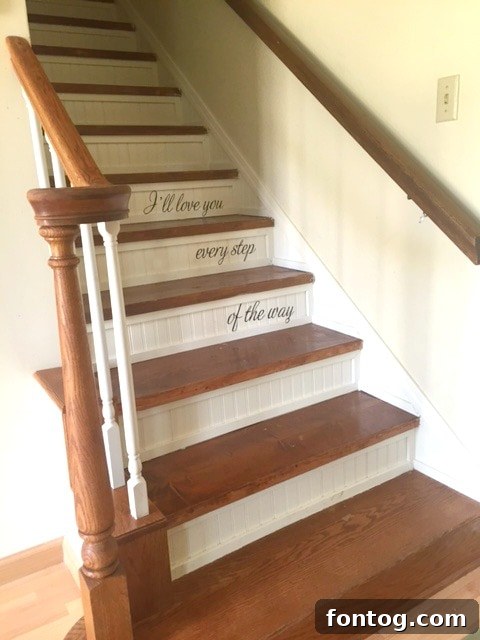
This phase, which came months after the initial staining due to our project hiatus, involved my husband’s impressive carpentry skills. To elevate the staircase from simple stained treads to a truly custom feature, he meticulously cut and installed trim and beadboard. This added a refined, classic touch to the risers, transforming them from plain painted surfaces into architectural statements. It required countless precise cuts, careful measurements, and meticulous fitting to ensure every piece was perfectly aligned. Once the trim and beadboard were in place, the extensive caulking began. Caulking all the seams and gaps is a time-consuming but crucial step that gives the entire structure a seamless, professional, and finished look.
6. The Final Touches: Painting and Personalization
With the trim and beadboard securely installed, we painted all the newly added elements a crisp, clean white. This created a stunning contrast with the dark stained treads, making both features pop and adding depth to the staircase. For a final, personal touch, we applied decorative decals to the risers, adding a unique design element that truly made the stairs feel like a central part of our home’s décor. The only remaining task is to re-stain the handrails on both sides to match the new treads and touch up any imperfections, but other than that, our incredible staircase transformation is officially complete!
Overcoming Challenges and Celebrating the Journey
As mentioned, this project proved to be an exercise in patience, extending over six months. What started with enthusiastic demolition hit a wall as holidays, family commitments, and other life events took precedence. There were moments of frustration, looking at the half-finished stairs, but we learned the importance of taking breaks and returning to a project with renewed energy. This protracted timeline taught us invaluable lessons about the ebb and flow of DIY renovations and the power of perseverance. Despite the delays, seeing the gradual transformation kept our motivation alive.
The Grand Reveal: A Transformed Home
Looking at our finished staircase now, I am beyond thrilled and immensely proud that I followed that initial impulse to remove the carpet. The difference is night and day. Where once stood an outdated, often dingy carpeted staircase, now gleams a beautiful, elegant stained wood structure that instantly elevates the aesthetic of our entire home. The dark wood treads, complemented by the crisp white trim and charming beadboard, create a focal point that is both inviting and stylish. It’s no longer just a way to get from one floor to another; it’s a statement piece, a testament to our vision and teamwork. The smooth, easy-to-clean surfaces are also a practical joy, a stark contrast to the dust-trapping carpet of yesteryear.
Maintaining Your Beautiful Wood Stairs
Now that your stunning stained wood stairs are complete, proper maintenance will ensure their beauty lasts for years to come. Unlike carpet, wood stairs require a different approach to cleaning and protection:
- Regular Cleaning: Dust and vacuum frequently to prevent grit and dirt from scratching the finish. Use a soft brush attachment on your vacuum.
- Immediate Spill Cleanup: Wipe up spills immediately with a damp cloth to prevent water damage or staining.
- Gentle Cleaning Agents: For deeper cleaning, use a wood-specific cleaner that is pH-neutral. Avoid harsh chemicals, abrasive cleaners, or excessive water, which can damage the finish.
- Protect from Scratches: Consider placing small rugs or runners at the top and bottom of the stairs to catch dirt and reduce wear in high-traffic areas. Trim pet nails regularly and use furniture pads if moving items up or down the stairs.
- Re-coating when Needed: Over time, the protective topcoat may show signs of wear, especially on the nose of the treads. When this happens, you may need to lightly sand the worn areas and apply a fresh coat of polyurethane to restore protection and shine.
Our DIY Journey: Worth Every Effort
This project, with all its challenges and triumphs, truly encapsulates the spirit of DIY home improvement. It’s about seeing potential, embracing a challenge, and working together to create something beautiful and lasting. Our transformed staircase is a constant reminder of what can be achieved with a clear vision, a little elbow grease, and a lot of patience. If you’re contemplating a similar renovation, I wholeheartedly encourage you to take the leap. The effort is significant, but the satisfaction of standing at the bottom of your newly transformed staircase is an absolutely unbeatable feeling. It’s not just a home update; it’s a piece of our story, beautifully etched into the heart of our home.