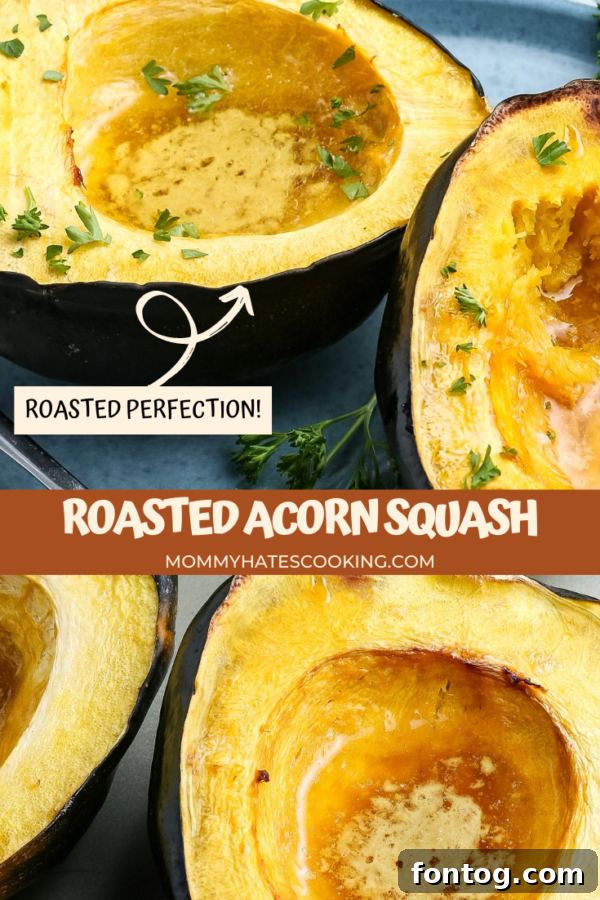
Roasted Acorn Squash: The Perfect Sweet and Savory Fall Side Dish
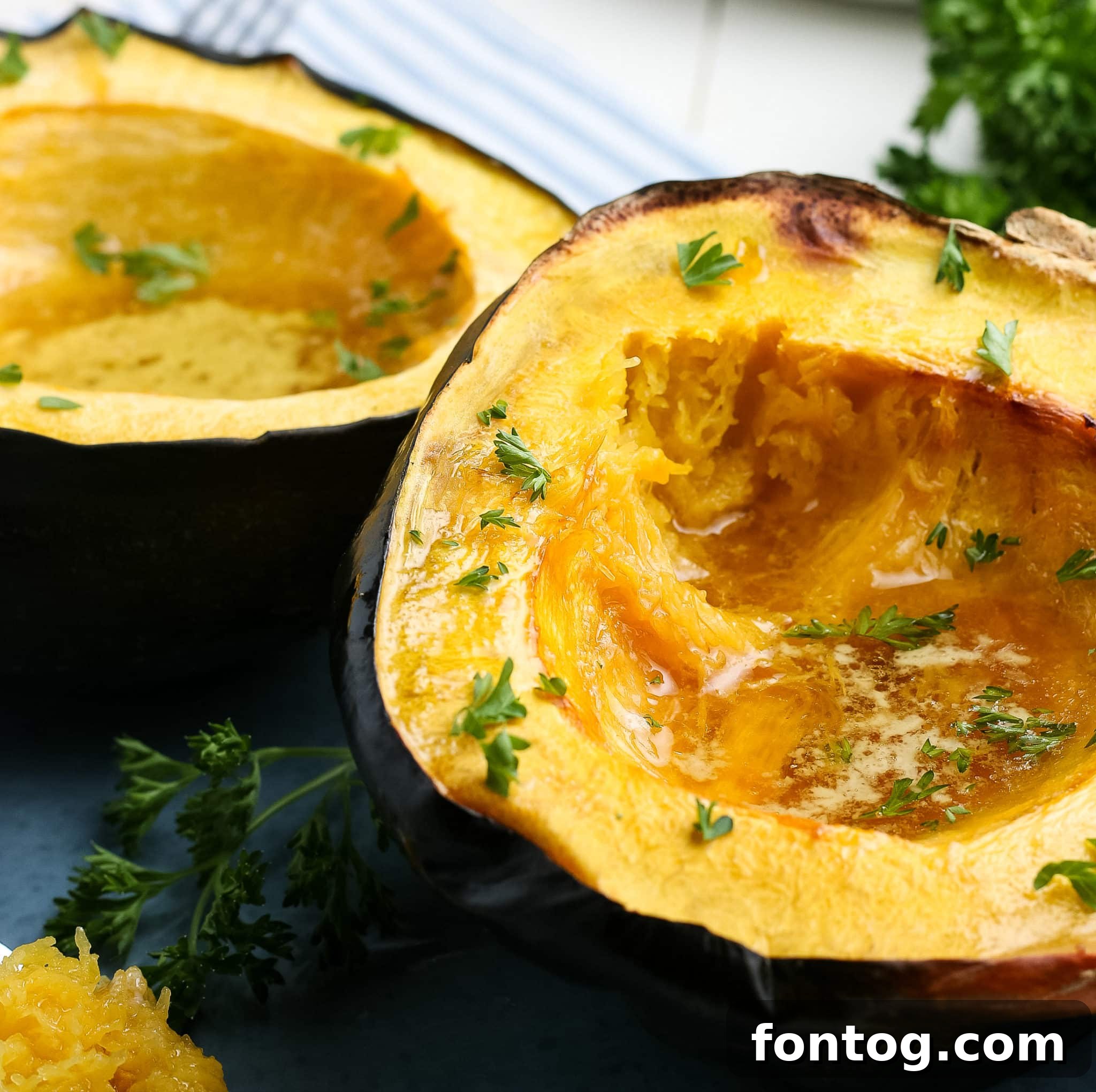
As the leaves begin to turn and a crispness fills the air, there’s no better way to embrace the flavors of autumn than with a warm, comforting dish of Roasted Acorn Squash. This classic side dish effortlessly marries sweet and savory notes, making it an ideal addition to any fall meal, from a cozy weeknight dinner to an elaborate Thanksgiving feast. Its natural sweetness, accentuated by a touch of butter, brown sugar, and maple syrup, transforms into a wonderfully caramelized delight that is sure to impress.
Acorn squash isn’t just delicious; it’s also incredibly versatile and beautiful, adding a vibrant touch to your holiday table with its distinct shape and inviting aroma. Whether you’re a seasoned chef or a beginner in the kitchen, preparing this dish is surprisingly simple, yielding impressive results every time.
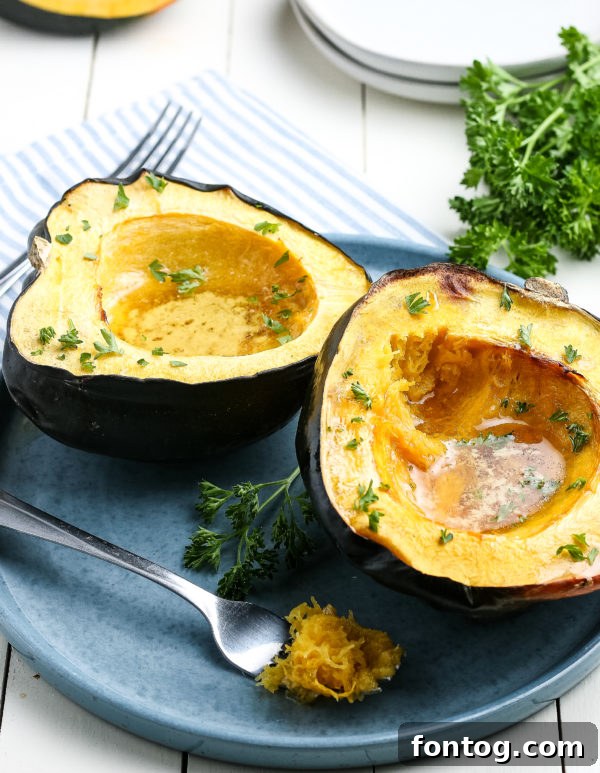
While acorn squash holds a special place in our fall recipe collection, other winter squashes are equally delightful. If you prefer the creamy texture of butternut squash, explore our Roasted Butternut Squash recipe or try a quick Air Fryer Butternut Squash for a different twist. But for now, let’s dive into the simple magic of roasting acorn squash to perfection.
The Nutritional Benefits of Acorn Squash
Beyond its delicious taste, acorn squash is a true nutritional powerhouse, making it an excellent choice for a healthy diet. This humble winter squash is packed with essential vitamins, minerals, and dietary fiber, contributing significantly to your daily nutrient intake. In fact, just one cup of cooked acorn squash can provide a substantial portion of the nutrients you need to maintain a healthy lifestyle.
Acorn squash is an excellent source of Vitamin C, a powerful antioxidant that supports immune health and collagen production. It’s also rich in Vitamin A, crucial for vision and skin health. Furthermore, it supplies a good amount of B vitamins, which are vital for energy metabolism. When it comes to minerals, acorn squash shines with high levels of potassium, essential for maintaining healthy blood pressure, and magnesium, which plays a role in hundreds of bodily functions, including muscle and nerve function, blood glucose control, and bone health.
The high fiber content in acorn squash aids in digestion, promotes a feeling of fullness, and can help regulate blood sugar levels, making it a great food for weight management and overall gut health. Moreover, its relatively low-calorie count means you can enjoy this satisfying side dish without guilt.
Selecting and Storing the Perfect Acorn Squash
To ensure the best flavor and texture for your roasted dish, choosing a ripe and healthy acorn squash is key. The ideal time to find fresh winter squashes like acorn and butternut is during the fall season, when they are harvested at their peak, offering the best taste and nutritional value.
How to Choose a Ripe Acorn Squash:
- Color: Look for a squash with a deep, dark green skin. This indicates ripeness. While the majority should be green, a small patch of orange or yellow on the side that rested on the ground is perfectly normal and a good sign.
- Firmness: The skin should be hard and firm all over. Avoid any squash that feels soft or has significant indentations, as this can be a sign of spoilage.
- Weight: A ripe acorn squash should feel heavy for its size. This suggests it’s full of moisture and flavor.
- Appearance: Check for any major blemishes, cuts, or mold. Small scars are usually fine, but deep gashes can lead to premature spoilage.
Storing Acorn Squash:
Uncut acorn squash can be stored for an extended period if kept properly. The best way to store it is in a cool, dry place away from direct sunlight, such as a pantry or a basement. Under these conditions, it can last anywhere from one to two months, or even longer. Once cut, the squash should be wrapped tightly in plastic wrap and stored in the refrigerator, where it will last for about 3-5 days. Always bring it to room temperature before cutting if it has been refrigerated, as this will make it easier and safer to slice.
How to Safely and Easily Cut Acorn Squash
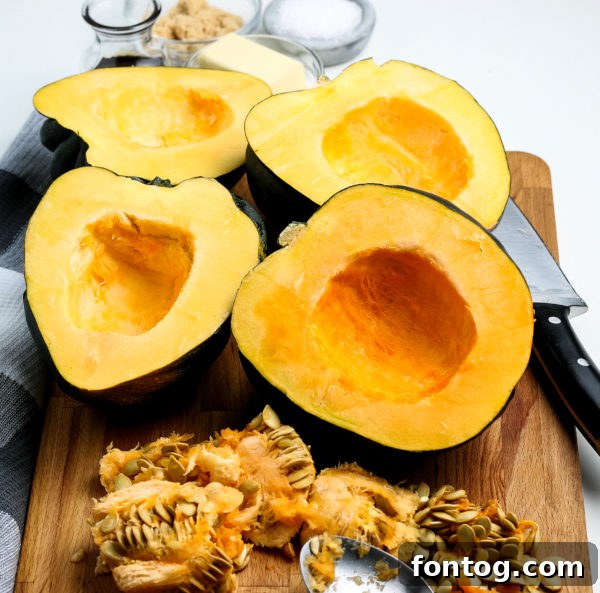
Cutting winter squash can seem daunting due to its tough exterior, but with the right tools and technique, it’s a straightforward process. The key to successful and safe cutting is a very sharp knife. A dull knife is actually more dangerous because it requires more force, increasing the risk of slips and accidents. So, make sure your knife is sharpened before you begin.
Step-by-Step Cutting Guide:
- Stabilize the Squash: Place the acorn squash on a sturdy cutting board. If the squash is wobbly, you can slice a thin piece off one side (either the top or bottom) to create a flat, stable base. This prevents it from rolling while you cut.
- Cut Lengthwise: Using a large, sharp chef’s knife, carefully cut the squash right in half lengthwise, from stem to base. You may need to press down firmly and rock the knife gently. Be mindful of your fingers and keep them curled away from the blade.
- Scoop Out Seeds: Once cut open, you’ll see the fibrous strings and seeds in the center cavity. An ice cream scoop or a sturdy spoon is perfect for efficiently scraping these out. Don’t discard the seeds; you can roast them separately for a delicious, crunchy snack!
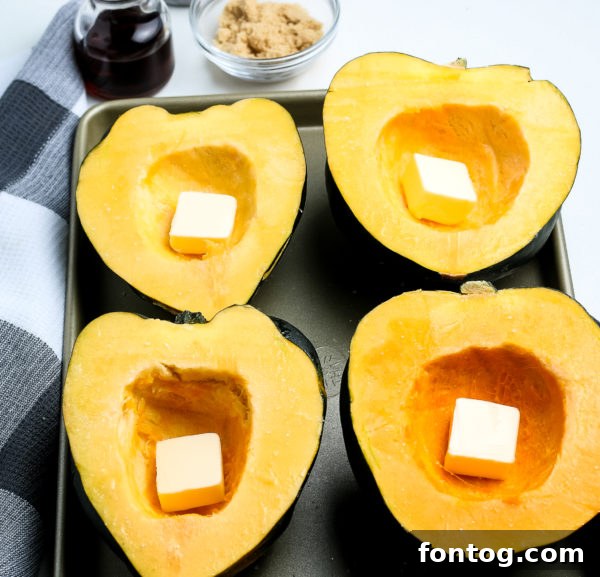
- Prepare for Roasting: At this point, your squash halves are ready for seasoning and roasting. For this particular recipe, we’re keeping them in halves, flesh side up, to create a perfect little cup for the butter, sugar, and syrup to melt into.
With your squash expertly cut, you’re now just a few pantry staples away from creating this wonderfully sweet and savory treat. The simple combination of ingredients transforms the humble acorn squash into a truly unforgettable side dish.
The Art of Roasting Acorn Squash: A Simple Recipe
Roasting is the best method to bring out the natural sweetness and tender texture of acorn squash. High heat caramelizes its sugars, creating a rich flavor and a beautifully golden-brown finish. This recipe takes less than an hour of cooking time and uses basic pantry ingredients, proving that extraordinary flavors don’t require complicated steps.
Roasted Acorn Squash
Course Side Dish, Vegetable
Cuisine American
Servings 4
Pin Recipe
Prep Time 10 minutes
Cook Time 1 hour
Total Time 1 hour 10 minutes
Ingredients
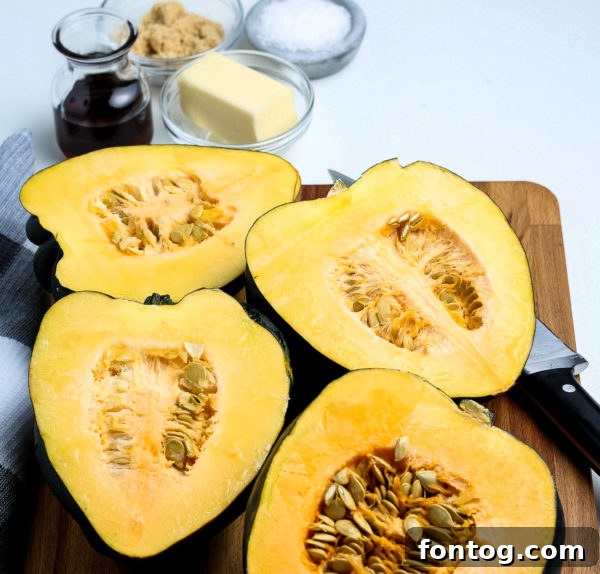
- 2 Whole Acorn Squash Cut in half with seeds removed
- 4 Tbsp Unsalted Butter (or 1/2 stick)
- 2 Tbsp Brown Sugar
- 2-4 Tsp Pure Maple Syrup
- Salt to Taste
Instructions
-
Preheat your oven to 400°F (200°C).
-
Carefully cut each acorn squash in half lengthwise and use a large spoon or ice cream scoop to clean out all seeds and fibrous bits.
-
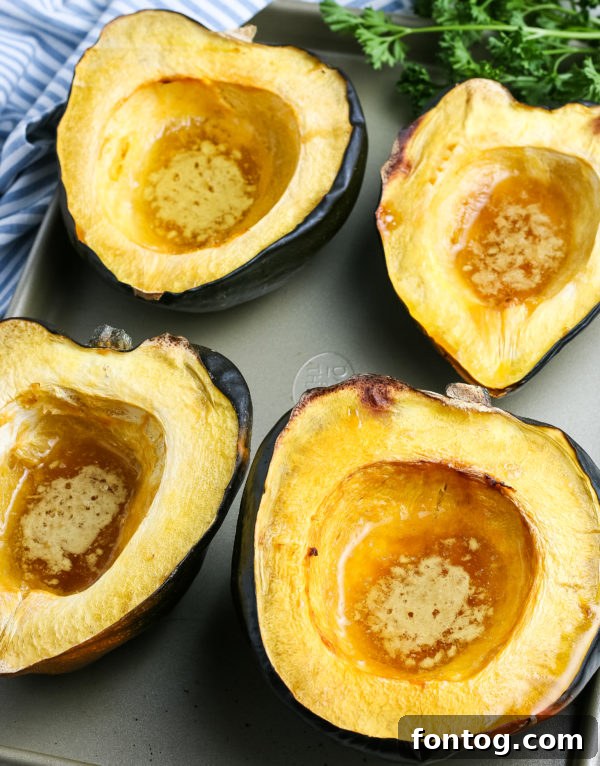
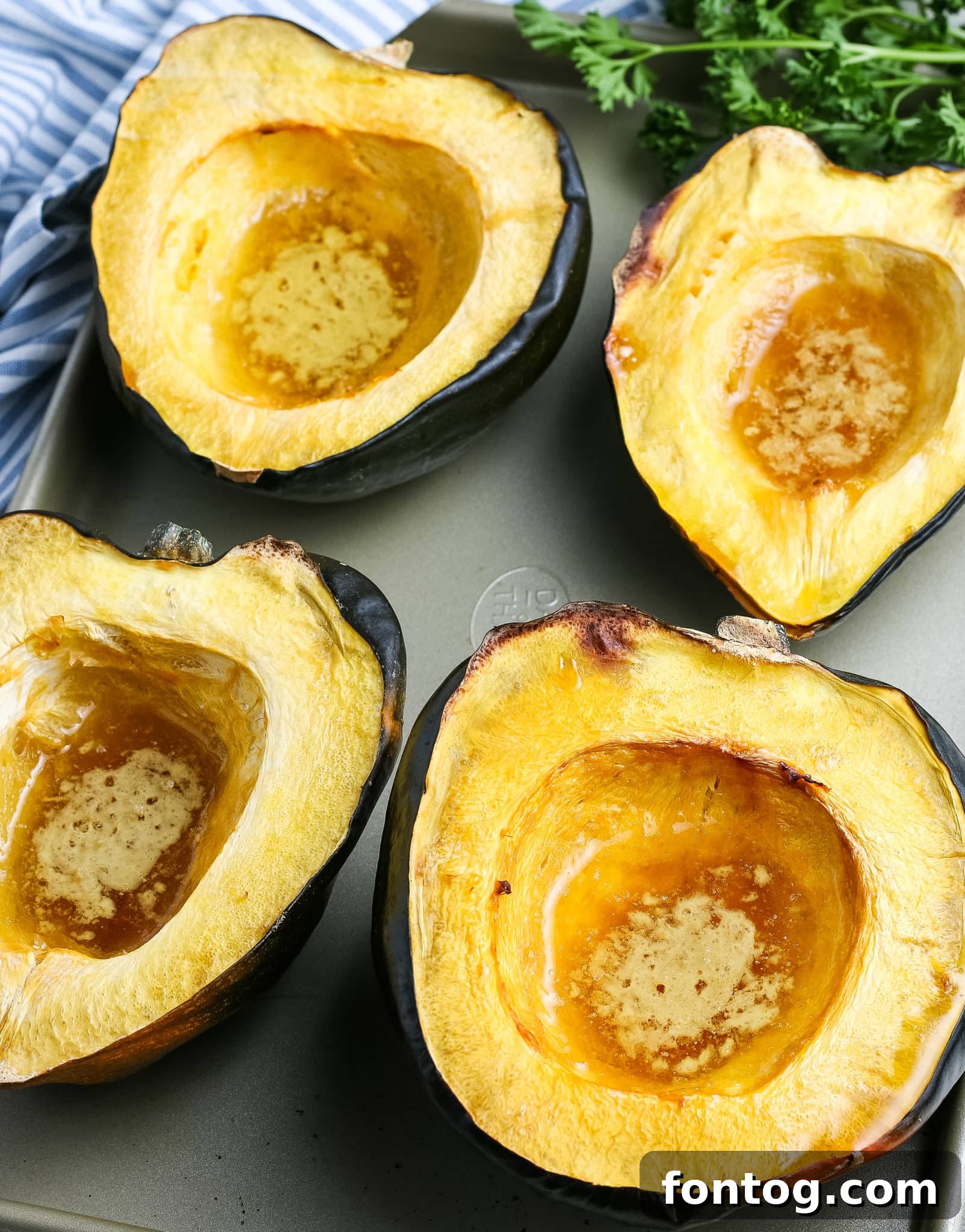
Place the squash halves on a baking sheet, ensuring the flesh side is facing up.
-
Lightly sprinkle each squash half with salt to enhance its natural flavors.
-
Place approximately 1/2 tablespoon of butter into the center cavity of each squash half.
-
Sprinkle 1/2 tablespoon of brown sugar over the butter in each squash half. The sugar will melt and caramelize beautifully during roasting.
-
Drizzle each half generously with pure maple syrup. Adjust the amount to your desired level of sweetness.
-
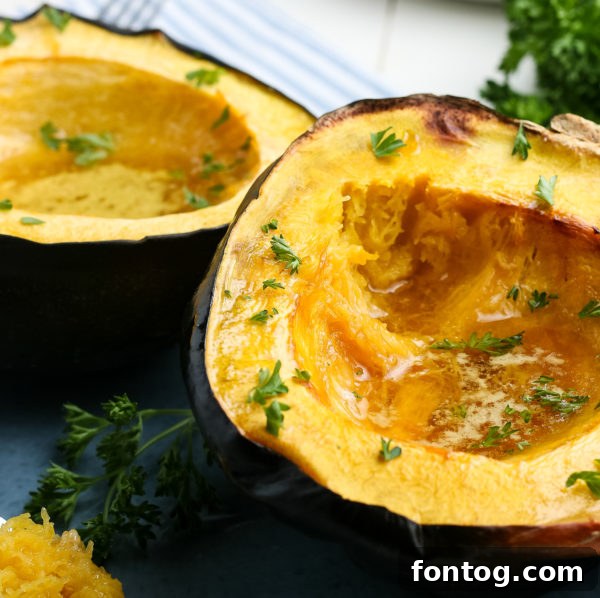
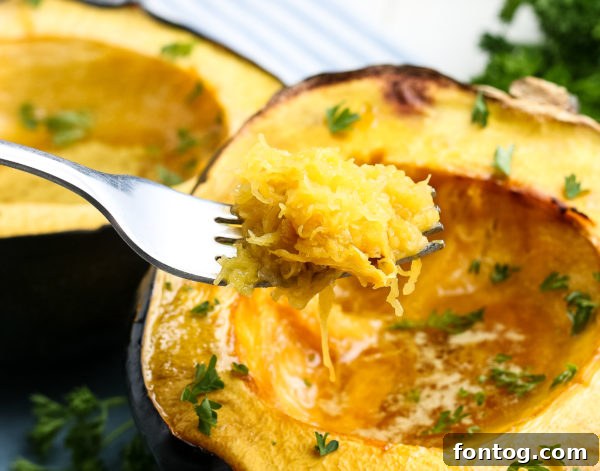
Bake in the preheated oven for about 60 minutes, or until the squash is golden brown, fork-tender, and the edges are slightly caramelized.
-
Remove from oven and serve immediately while warm.
Notes
Edible Skin: The skin of acorn squash becomes tender and perfectly edible once roasted, adding extra fiber and nutrients to your dish. No need to peel!
Variations: Experiment with spices! A dash of cinnamon or nutmeg can enhance the sweet profile, while a pinch of smoked paprika can deepen the savory notes. For extra texture, sprinkle chopped pecans or walnuts over the squash during the last 15 minutes of baking.
Nutrition
Serving Suggestions for Roasted Acorn Squash
Roasted acorn squash is incredibly versatile and pairs well with a variety of main courses. Its rich, sweet, and slightly nutty flavor complements both savory meats and vegetarian dishes.
- Holiday Meals: It’s a must-have alongside roasted turkey, ham, or prime rib for Thanksgiving and Christmas dinners.
- Weeknight Dinners: Serve it with roasted chicken, pork chops, or a simple steak for a balanced and flavorful meal.
- Vegetarian Option: For a hearty vegetarian dinner, serve a squash half filled with quinoa, wild rice, or a mixture of roasted vegetables and herbs.
- Breakfast or Brunch: Leftover roasted squash can be diced and added to omelets or served alongside breakfast sausages.
- Soups and Salads: Cube roasted squash and add it to fall salads for extra flavor and nutrition, or blend it into creamy squash soups.
Frequently Asked Questions About Acorn Squash
Can I eat the skin of acorn squash?
Yes, absolutely! Once roasted, the skin of acorn squash becomes quite tender and is completely edible. It even adds a bit of extra fiber and a subtle earthy flavor to your dish.
How do I know when my roasted acorn squash is done?
Your roasted acorn squash is ready when it’s fork-tender. A fork should easily pierce through the flesh. The edges should also appear slightly browned and caramelized, indicating that the sugars have developed beautifully.
Can I prepare acorn squash ahead of time?
You can cut the squash in half and scoop out the seeds a day or two in advance. Store the halves, tightly wrapped, in the refrigerator. However, for the best flavor and texture, it’s recommended to season and roast the squash just before serving.
What’s the difference between acorn and butternut squash?
While both are delicious winter squashes, they have distinct characteristics. Acorn squash has a dark green, ridged skin and a mild, slightly nutty flavor, often described as a mix between sweet potato and pumpkin. Butternut squash has a smooth, tan skin and a sweeter, more intensely nutty flavor. Their textures also differ, with acorn squash being a bit stringier and butternut being creamier. Both are fantastic for roasting, but acorn squash tends to hold its shape better.
Enjoy Your Homemade Roasted Acorn Squash!
Roasted Acorn Squash is more than just a side dish; it’s a celebration of fall’s bounty and the simple pleasures of homemade cooking. Its irresistible blend of sweet and savory notes, combined with its ease of preparation, makes it a truly wonderful addition to any meal. We hope this guide inspires you to create and savor this delicious dish in your own kitchen.
Did you make this recipe?
We’d love to see your culinary creations! Make sure to tag #mommyhatescoooking on Instagram and follow us for more delicious recipes @momhatescooking.
Pin Recipe
Share on Facebook